Keeping aquarium chemistry stable is easier when additives can be delivered in measured amounts instead of poured by hand. The best aquarium dosing pumps under $50 offer practical automation for water treatments, nutrients, supplements, and laboratory-style liquid metering without requiring a premium controller.
This roundup compares compact peristaltic pumps, adjustable-flow models, DIY pump heads, and reservoir-compatible options. Pay close attention to flow range, voltage, tubing compatibility, priming behavior, and whether a power adapter or controller is included.
Best 10 Aquarium Dosing Pumps Under 50 Picks for 2026
Compact DIY Pick
Kamoer NKP Low-Flow Peristaltic Pump

- 12V DC pump with at least 70 ml/min flow
- Snap-in head for easier tube changes
- Compact, lightweight, and bidirectional
Best For: Custom aquarium dosing and small liquid-transfer projects
Top-Off Specialist
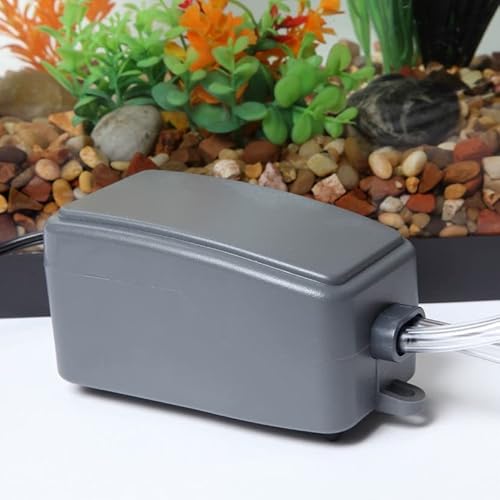
- 3 GPH flow rate for small water transfers
- Lifts water up to 24 inches
- Useful for top-offs, reef dosing, and drip systems
Best For: Aquarium top-offs and modest water-transfer tasks
Adjustable Flow Pick
Self-Priming 12V/24V Peristaltic Pump

- Three tubing-size options for different flow needs
- Available in 12V and 24V versions
- Self-priming and bidirectional operation
Best For: Custom aquarium dosing and lab liquid transfer
Reservoir Companion
Aquarium Choice 1.5L Dosing Container

- 1.5-liter acrylic reservoir with capacity scale
- Includes one meter of silicone tubing
- Blue lid helps reduce evaporation
Best For: Storing coral supplements alongside a separate dosing pump
Compact Adjustable Pick
Kamoer KCP-X Mini Peristaltic Pump

- Manual 19–65 ml/min flow adjustment
- Compact, low-noise 24V design
- Snap-fit head simplifies cleaning and hose changes
Best For: Compact manual aquarium liquid dosing
Simple Manual Dosing Pick
Gikfun 12V Adjustable Peristaltic Pump
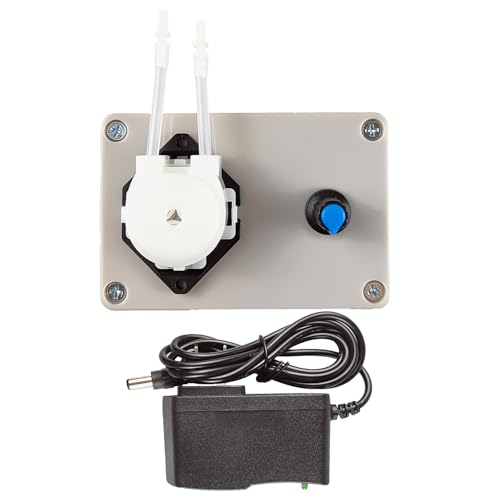
- Adjustable 8–70 ml/min flow range
- Includes 12V power adapter
- Easy-disassembly pump head
Best For: Intermittent aquarium and lab liquid transfer
Two-Pump Value Pick
2PCS 12V DC Peristaltic Dosing Pumps

- Two compact 12V pumps included
- Stated 0–100 ml/min flow range
- Reversible flow direction via power connection
Best For: DIY aquarium setups needing two pumps
Best Value Adjustable Doser

- 5–100 mL/min adjustable flow
- AC 100–240V, 50/60Hz input
- Removable head for easier cleaning
Best For: Compact aquarium and lab liquid dosing
Best Simple-Control Option
Adjustable Single-Head Peristaltic Pump

- Knob-based flow adjustment
- Compact single-head design
- 110–240V adapter setup
Best For: Straightforward manual aquarium dosing
Best Multipack Setup
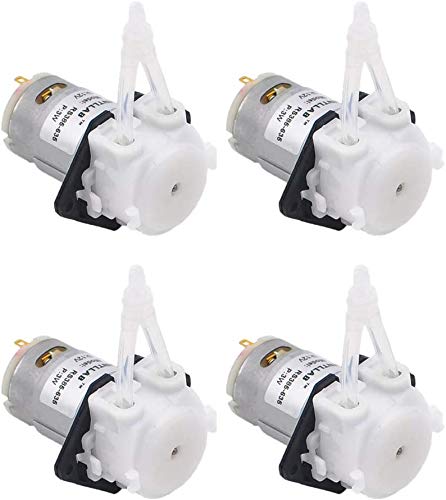
- Four pumps in one pack
- 5–100 mL/min flow rate
- Reversible direction via polarity
Best For: DIY systems needing multiple 12V pumps
Compact DIY Pick – Kamoer NKP Low-Flow Peristaltic Pump
For aquarium dosing pumps under 50, the Kamoer NKP is a compact 12V option suited to controlled liquid transfer, sampling, and small aquarium projects. Its snap-in pump head makes tube replacement and cleaning straightforward.
Best For: DIY aquarium dosing, liquid sampling, bonsai irrigation, and other compact transfer setups.
Pros:
- Small, lightweight design with low power consumption.
- Flow rate of at least 70 ml/min.
- Supports changing liquid-flow direction.
- Snap-in head simplifies tube replacement and cleaning.
Cons:
- Requires a 12V DC power source.
- Uses specific 3mm ID x 5mm OD tubing.
- Designed as a pump component rather than a complete dosing system.
This is a practical choice when you need a small, bidirectional pump for a custom aquarium or lab setup and are comfortable supplying the power and tubing separately.
Top-Off Specialist – Koller Aqua Lift Dosing Pump
Among aquarium dosing pumps under 50, the Koller Aqua Lift focuses on moving small amounts of water for top-offs, supplement dosing, and drip applications. Its submersible design can lift water up to 24 inches.
Best For: Aquarium top-offs, reef supplement dosing, reptile-terrarium drip systems, and priming gravity-fed siphons.
Pros:
- Moves water up to a 24-inch lift height.
- Suitable for aquarium and reef dosing tasks.
- Can support reptile drip systems and fish or coral acclimation.
- Includes a one-year manufacturer warranty.
Cons:
- Limited to a listed flow rate of 3 GPH.
- Intended for small water movement rather than high-volume pumping.
- As a corded electric submersible pump, setup depends on access to power and suitable placement.
The Aqua Lift is a versatile option for straightforward water-transfer jobs, especially when a modest lift height matters more than precision peristaltic dosing.
Adjustable Flow Pick – Self-Priming 12V/24V Peristaltic Pump
This adjustable peristaltic pump is a flexible choice for aquarium dosing pumps under 50, with tubing options and both 12V and 24V versions. Its self-priming, bidirectional design is suited to aquarium additives and other controlled liquid-transfer work.
Best For: Aquarium dosing, laboratory liquid transfer, and setups needing selectable tubing sizes or operating voltage.
Pros:
- Available with 1×3, 2×4, or 3×5 silicone tubing options.
- Offers 12V or 24V DC versions and reversible flow direction.
- Self-priming design helps limit backflow.
- Tool-free pump-head access supports faster tube changes.
Cons:
- Requires choosing the appropriate tubing and voltage version before purchase.
- Listed flow rates vary by tubing and power configuration.
- Requires an external DC power source.
Choose this model when matching the pump to a particular dosing rate is important. Its configuration flexibility is useful, but buyers should verify the selected tubing and voltage combination for their aquarium setup.
Reservoir Companion – Aquarium Choice 1.5L Dosing Container
For aquarium dosing pumps under 50, the Aquarium Choice container provides a dedicated 1.5-liter acrylic reservoir for coral microelements. It includes one meter of silicone tubing and a blue lid intended to help reduce liquid evaporation.
Best For: Organizing liquid supplements and pairing a reservoir with an aquarium dosing-pump setup.
Pros:
- 1,500 ml capacity with graduated markings.
- Includes one meter of white silicone tubing.
- Acrylic construction is lightweight and designed for aquarium use.
- Blue lid helps avoid liquid evaporation.
Cons:
- This is a storage reservoir, not a powered dosing pump.
- Only one reservoir is included.
- Does not include a dosing controller or pump motor.
This container works best as the liquid-storage part of a broader dosing system. It is a useful accessory for keeping coral supplements organized, but it cannot dose liquids on its own.
Compact Adjustable Pick – Kamoer KCP-X Mini Peristaltic Pump
For aquarium dosing pumps under 50, the Kamoer KCP-X is a compact option with manually adjustable flow from 19 to 65 ml/min. Its 24V power supply, low-noise operation, and snap-fit pump head make it practical for controlled aquarium liquid transfer.
Best For: Aquarium users who want a small, adjustable peristaltic pump with included power supply and easy hose maintenance.
Pros:
- Adjustable 19–65 ml/min flow rate
- Compact design with adjustable pump-head direction
- Snap-fit head makes hose replacement and cleaning easier
- Includes a 24V AC/DC power supply and silicone tube
Cons:
- Supplied tube is limited to 3mm ID × 5mm OD
- Flow adjustment is manual rather than automated
- Designed for ambient temperatures of 0–40°C and relative humidity below 80%
The KCP-X stands out for its small footprint and straightforward manual control. It is a sensible choice when you need adjustable aquarium dosing without a complicated control system.
Simple Manual Dosing Pick – Gikfun 12V Adjustable Peristaltic Pump
Among aquarium dosing pumps under 50, the Gikfun EK1960 offers a broad manually adjustable range of 8–70 ml/min. It includes a 12V adapter and a removable pump head, making it useful for occasional aquarium or laboratory liquid-transfer tasks.
Best For: Users seeking an affordable, knob-controlled dosing pump for intermittent aquarium or lab use.
Pros:
- Adjustable 8–70 ml/min flow range
- Includes a DC 12V power adapter
- Pump head is designed for easier disassembly and maintenance
- Suitable for a range of liquid-transfer applications
Cons:
- Not recommended for long-term continuous operation
- Cannot absorb viscous liquids
- Uses a relatively narrow 2mm ID × 4mm OD tube
The EK1960 is best treated as a straightforward, intermittent-use pump rather than a continuous-duty dosing system. Its wide adjustment range and included adapter keep setup simple.
Two-Pump Value Pick – 2PCS 12V DC Peristaltic Dosing Pumps
For shoppers comparing aquarium dosing pumps under 50, this two-piece 12V set provides compact peristaltic pump heads with a stated 0–100 ml/min flow range. The snap-in design supports cleaning and replacement, while reversing the power connection changes flow direction.
Best For: DIY aquarium setups or users who want two small pumps for flexible, reversible liquid transfer.
Pros:
- Includes two 12V DC dosing pumps
- Stated flow range of 0–100 ml/min
- Snap-in design helps with cleaning and pump-head replacement
- Positive or negative connection changes flow direction
Cons:
- Power source is listed as battery powered, so an appropriate 12V supply may be needed
- Supplied specifications list a 3mm ID × 5mm OD tube size
- Compact pump design may require DIY integration into the aquarium system
This set is appealing when quantity and flexibility matter more than a ready-to-automate controller. Its reversible direction and two-pump format suit hands-on aquarium projects and small liquid-transfer applications.
Best Value Adjustable Doser – INTLLAB DIY Peristaltic Pump
If you are comparing aquarium dosing pumps under 50, the INTLLAB DP-385 offers a straightforward way to move liquids at an adjustable 5–100 mL/min rate. Its 100–240V input and removable pump head make it practical for aquarium, laboratory, and water-treatment setups.
Best For: Aquarists and hobbyists who want a compact, adjustable-flow peristaltic pump for dosing or transferring liquids.
Pros:
- Adjustable 5–100 mL/min flow range.
- Supports AC 100–240V, 50/60Hz input.
- Removable pump head simplifies cleaning and maintenance.
- Compact 6.4-ounce design.
Cons:
- The notes do not specify included aquarium tubing or mounting hardware.
- Flow adjustment is indicated by LED brightness rather than a numbered digital display.
This is a versatile pick when you need adjustable dosing in a compact package. Confirm the included accessories and power arrangement before ordering for a permanent aquarium installation.
Best Simple-Control Option – Adjustable Single-Head Peristaltic Pump
Among aquarium dosing pumps under 50, this single-head peristaltic model focuses on uncomplicated manual control. A front knob lets you adjust the flow, while the 110–240V adapter setup and easy-disassembly head suit aquarium, laboratory, and other small liquid-handling applications.
Best For: Users who prefer a compact single-head pump with a simple knob for adjusting liquid flow.
Pros:
- Flow rate adjusts with a simple control knob.
- Single-head design keeps the unit compact.
- Pump head disassembles for cleaning and maintenance.
- Designed for 110–240V use with an adapter.
Cons:
- Single-head construction provides one dosing channel.
- The supplied notes do not state a specific flow-rate range.
- Its laboratory-oriented design may require separate aquarium tubing or fittings.
This pump is a sensible choice when ease of adjustment matters more than multiple channels. Because the listed details do not provide a numeric flow range, verify that its output matches your aquarium dosing needs.
Best Multipack Setup – INTLLAB 4-Pack 12V DC Pumps
For aquarium dosing pumps under 50, this four-pack is useful when you need several compact pump units rather than a single assembled controller. Each 12V DC peristaltic pump supports a stated 5–100 mL/min flow rate, and reversing the polarity changes the flow direction.
Best For: DIY aquarium projects and users who want multiple 12V pump units for separate liquid-handling tasks.
Pros:
- Includes four peristaltic pump units.
- Stated 5–100 mL/min flow-rate range.
- 12V DC operation suits compatible DIY power systems.
- Flow direction changes through positive/negative connection.
Cons:
- Requires a suitable 12V power arrangement.
- The notes do not mention an included controller, adapter, or tubing.
- DIY wiring may require more setup than a ready-to-use dosing system.
This multipack stands out for flexibility and spare capacity, especially in custom aquarium builds. Plan for the required 12V power and connections, and confirm the included components before installation.
How We Picked the Best Aquarium Dosing Pumps Under 50
We focused on the features that matter most for affordable aquarium dosing: controllable flow, suitable low-volume delivery, self-priming performance, tubing and connector compatibility, power requirements, and installation flexibility. The selection includes complete pumps, replacement-style dosing heads, multi-packs, and reservoir products because budget aquarium setups often have different automation needs.
Product descriptions and stated specifications were compared for intended use, voltage, flow range, pump format, and included accessories. Since inexpensive dosing equipment can vary in calibration and build quality, users should verify actual output with a measuring container before adding any chemical to a tank.
Quick Comparison
| Best For | Look For | Potential Trade-Off |
|---|---|---|
| Simple one-channel dosing | Complete pump with adapter | Limited automation features |
| DIY aquarium systems | Separate pump head or 12V motor | May require wiring and tubing |
| Fine supplement dosing | Low, adjustable flow rate | Slower delivery |
| Higher-volume transfer | Higher GPH or mL/min rating | Less suitable for tiny doses |
| Multiple additives | Multi-pack or several channels | More calibration and maintenance |
Key Buying Factors for Aquarium Dosing Pumps Under 50
Flow Rate and Adjustment
Match the pump’s minimum and maximum output to the dose you need. A fast pump can be convenient for water changes but difficult to calibrate for small daily additions. Adjustable models provide more control, while fixed low-flow pumps may be simpler and more repeatable.
Voltage, Power, and Controls
Check whether the unit uses 12V DC, 24V DC, or household AC power. DC pumps can suit DIY controllers and timer systems, but they may need a compatible adapter. An included adapter is useful, while bare pump heads are better for experienced builders.
Tubing and Chemical Compatibility
Confirm the tubing’s inner and outer diameter, connector style, and material before buying. Peristaltic pumps isolate the liquid inside the tube, but tubing still needs to tolerate saltwater, additives, fertilizers, or other chemicals. Replace worn tubing promptly to preserve accuracy.
Calibration and Maintenance
Measure the pump’s output over a set time, then calculate the actual milliliters delivered. Recheck calibration after changing tubing, adjusting speed, or moving the pump. Keep the pump above or below the reservoir according to its priming instructions, and prevent siphoning when the motor is off.
Who Should Buy Which Aquarium Dosing Pumps Under 50?
Choose a complete adjustable pump if you want the easiest path to basic automated dosing. A low-flow Kamoer-style unit is a better fit for precise, modest additions, while higher-output models suit transfers or larger supplement volumes. DIY builders may prefer separate 12V pump heads or multi-packs for custom controllers and several dosing channels. If you need a compact liquid source as well as a pump, a reservoir container can simplify installation, but check that its fittings match your tubing.
These budget pumps are best for hobbyists comfortable with testing output and using an external timer or controller when required. For unattended reef systems, verify the pump regularly and consider overflow protection, check valves, and a backup plan before relying on any low-cost dosing setup.