Stable water chemistry is essential for healthy marine fish, corals, and invertebrates. The right test kit helps you spot ammonia, pH, nitrate, and other changes before they become serious problems.
This roundup compares 10 options, from high-volume liquid kits and reef-specific tests to fast strips and app-enabled tools, so you can match testing speed and detail to your aquarium routine.
Best 10 Aquarium Test Kits for Saltwater Tanks Picks for 2026
Best Core-Parameter Kit
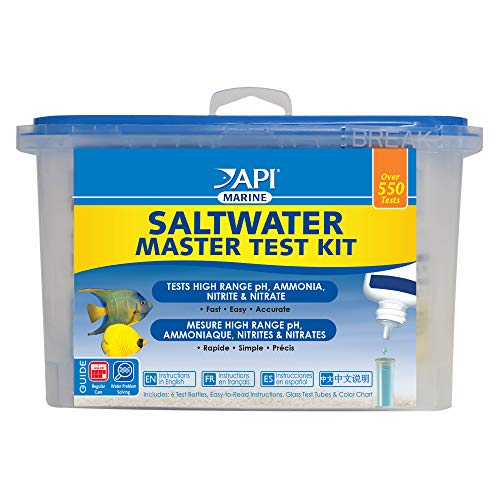
- Tests four key saltwater parameters
- Includes solutions, tubes, and color card
- Made for weekly saltwater monitoring
Best For: Routine pH and nitrogen-cycle checks
Best Reef Chemistry Coverage
Salifert Master Reef Testing Combo

- Includes six professional test kits
- Covers calcium, nitrate, phosphate, pH, alkalinity, and magnesium
- Designed around core reef parameters
Best For: Marine reef tanks needing broad chemistry testing
Best Easy Weekly Checks
API 5-in-1 Aquarium Test Strips

- Tests pH, nitrite, nitrate, carbonate, and general hardness
- Provides 100 strips per container
- Works with freshwater and saltwater aquariums
Best For: Fast routine water screening
Best Broad Strip Coverage

- Tests 11 listed water and temperature parameters
- Includes 150 strips and 50 ammonia strips
- Adds tubes, thermometer, color chart, and eBook
Best For: Convenient broad checks across aquarium setups
Reef Parameter Specialist
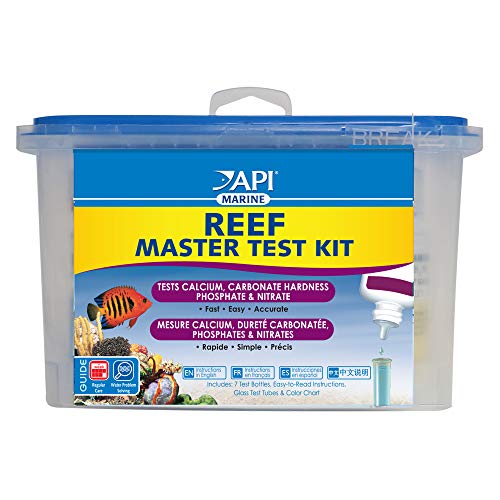
- Tests calcium, carbonate hardness, phosphate, and nitrate
- Includes solutions, color cards, and capped test tubes
- Designed specifically for reef aquariums
Best For: Weekly reef-tank monitoring and troubleshooting
Broad-Coverage Strip Kit
AAwipes 8-in-1 Aquarium Test Strips

- Includes 100 strips for repeated testing
- Measures eight listed water parameters
- Works with saltwater, freshwater, ponds, and shrimp tanks
Best For: Frequent, broad water-quality screening
Simple Weekly Monitor
Tetra EasyStrips Complete Test Kit

- Checks seven water-quality readings on one strip
- Includes 25 multi-test and 25 ammonia strips
- Suitable for freshwater and saltwater aquariums
Best For: Quick weekly aquarium checks
Best Digital Option
App-Enabled 10-in-1 Aquarium Test Kit

- App scans strips for digital results
- Tests 10 common water parameters
- Suitable for freshwater, saltwater, and reef tanks
Best For: Aquarists who prefer app-assisted testing
Best Ammonia Specialist
API 130-Test Aquarium Ammonia Kit
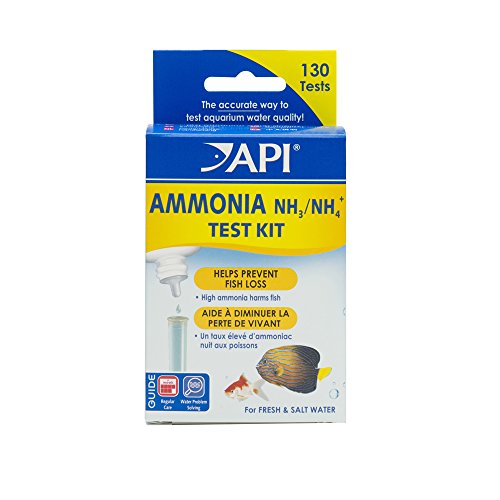
- Provides up to 130 ammonia tests
- Works with freshwater and saltwater samples
- Measures ammonia from 0 to 8 ppm
Best For: Cycling tanks and recurring ammonia monitoring
Best Strip Value
100-Count 10-in-1 Aquarium Test Kit

- Includes 100 quick-dip test strips
- Checks 10 parameters with a color chart
- Works for freshwater and saltwater setups
Best For: Frequent, broad water-quality checks on a budget
Best Core-Parameter Kit – API Saltwater Master Test Kit
For routine aquarium test kits for saltwater tanks, the API Saltwater Master Test Kit focuses on four essential measurements: high-range pH, ammonia, nitrite, and nitrate. Its liquid-testing format includes six solution bottles, four capped test tubes, a color card, and an instructional booklet for weekly monitoring or troubleshooting.
Best For: Saltwater aquarists who want a dedicated liquid kit for monitoring core nitrogen-cycle and pH parameters.
Pros:
- Tests high-range pH, ammonia, nitrite, and nitrate.
- Includes six testing solutions, four capped tubes, and a color card.
- Designed specifically for saltwater aquariums and weekly checks.
Cons:
- Does not include calcium, alkalinity, magnesium, or phosphate tests.
- Liquid testing requires more setup than dip strips.
This is a straightforward choice when your priority is tracking the basic parameters most associated with common water problems. Reef keepers managing additional chemistry will need a more specialized or expanded kit.
Best Reef Chemistry Coverage – Salifert Master Reef Testing Combo
The Salifert Master Reef Testing Combo is a broad option among aquarium test kits for saltwater tanks, combining six professional test kits in one package. It covers calcium, nitrate, phosphate, pH, alkalinity, and magnesium—the core parameters listed for a marine reef aquarium.
Best For: Reef aquarists who want one multi-kit package for monitoring major calcium, nutrient, and alkalinity-related parameters.
Pros:
- Includes six separate test kits.
- Covers calcium, nitrate, phosphate, pH, alkalinity, and magnesium.
- Targets core parameters of saltwater and marine reef tanks.
Cons:
- The supplied details do not specify test quantities or included accessories.
- It does not list ammonia or nitrite testing.
Its parameter selection is especially relevant to reef systems where calcium, magnesium, alkalinity, and phosphate are regular monitoring concerns. Confirm the package contents and testing instructions if you need a complete cycling-focused kit.
Best Easy Weekly Checks – API 5-in-1 Aquarium Test Strips
API 5-IN-1 TEST STRIPS Freshwater and Saltwater Aquarium Test Strips 100-Count Box
Check Price On AmazonThese API 5-in-1 strips offer a quick approach to aquarium test kits for saltwater tanks, with 100 strips in the container. Each strip checks pH, nitrite, nitrate, carbonate hardness, and general hardness, and the color chart is intended for fast readings during weekly monitoring or when water problems appear.
Best For: Aquarists who prefer quick, low-mess screening for several general water parameters.
Pros:
- Checks five parameters with one dip test.
- Includes 100 test strips.
- Suitable for freshwater and saltwater aquariums.
Cons:
- Does not test ammonia according to the supplied parameter list.
- Strip testing provides less parameter coverage than dedicated reef kits.
This is a convenient screening tool for frequent checks, especially when speed matters. For a saltwater tank with more demanding reef chemistry needs, pair it with tests for parameters such as calcium, magnesium, phosphate, or alkalinity.
Best Broad Strip Coverage – 11-in-1 Aquarium Test Strips
This 11-in-1 kit takes a broad strip-based approach to aquarium test kits for saltwater tanks, listing tests for ammonia, pH, iron, chlorine, hardness, carbonate, nitrate, nitrite, alkalinity, copper, and temperature. It includes 150 strips, a color chart, testing tubes, an aquarium thermometer, and an eBook.
Best For: Aquarists who want wide parameter coverage and a large supply of strips for freshwater or saltwater setups.
Pros:
- Lists 11 water-quality parameters, including ammonia and temperature.
- Includes 150 strips, with 50 ammonia strips noted in the product information.
- Comes with a color chart, testing tubes, thermometer, and eBook.
Cons:
- Strip-based testing may be less suitable when highly specialized reef testing is needed.
- Opened strips are recommended for use within three months for maximum accuracy.
- The supplied details do not identify separate saltwater-specific ranges for every test.
The kit is appealing for convenience and breadth, particularly if you monitor multiple aquarium types or want ammonia included in a strip format. Reef keepers should verify that the listed strip readings meet their precision needs for ongoing marine maintenance.
Reef Parameter Specialist – API Reef Master Test Kit
For reef keepers comparing aquarium test kits for saltwater tanks, the API Reef Master Test Kit focuses on four important reef-water parameters: calcium, carbonate hardness, phosphate, and nitrate. It is designed for weekly monitoring and for checking water when fish or aquarium problems appear.
Best For: Reef aquariums needing routine monitoring of calcium, hardness, phosphate, and nitrate.
Pros:
- Tests four key reef-aquarium parameters.
- Includes seven bottles of testing solution, two color cards, and four capped test tubes.
- Designed for weekly use and troubleshooting water or fish problems.
Cons:
- Designed for reef aquariums only.
- Uses liquid solutions and color cards rather than quick test strips.
This is a focused choice for reef tanks where calcium and carbonate hardness matter alongside phosphate and nitrate. Choose it when those four measurements are more useful to you than broader freshwater-oriented testing.
Broad-Coverage Strip Kit – AAwipes 8-in-1 Aquarium Test Strips
AAwipes is a convenient option among aquarium test kits for saltwater tanks, especially if you want to check several readings at home with one bottle. The 100 strips measure free chlorine, nitrate, nitrite, hardness, sodium chloride, total alkalinity, pH, and ammonia nitrogen.
Best For: Fish keepers who want high-volume, multi-parameter strip testing for saltwater or freshwater setups.
Pros:
- Provides 100 test strips.
- Checks eight listed water parameters, including ammonia nitrogen and sodium chloride.
- Uses a three-step process with results read by comparing colors to the chart.
- Suitable for aquariums, ponds, pools, and shrimp tanks.
Cons:
- Ammonia nitrogen requires a separate five-second dip and a longer 180-second reading time.
- Color-chart testing may be less targeted than a dedicated reef liquid test kit for specialized reef parameters.
The large strip count makes this kit practical for frequent testing, and the sealed bottle is intended to protect the strips from moisture. It is a strong convenience pick when broad screening is the priority.
Simple Weekly Monitor – Tetra EasyStrips Complete Test Kit
For straightforward aquarium test kits for saltwater tanks, Tetra EasyStrips combine seven tests in one strip. The kit includes 25 strips for ammonia, nitrates, nitrites, hardness, chlorine, alkalinity, and pH, with results read after a 60-second wait.
Best For: Aquarists who want quick weekly checks after water changes or when adding fish.
Pros:
- One strip checks seven listed water-quality readings.
- Includes 25 multi-test strips plus 25 ammonia test strips.
- Works in both freshwater and saltwater aquariums.
- Results are designed to be read after 60 seconds.
Cons:
- Includes fewer total multi-test strips than the 100-strip AAwipes kit.
- Does not list calcium or phosphate testing.
This kit suits routine maintenance rather than specialized reef chemistry. Its simple dip-and-read format is useful for checking water weekly, after changes, or before and after adding new fish.
Best Digital Option – App-Enabled 10-in-1 Aquarium Test Kit
For shoppers comparing aquarium test kits for saltwater tanks, this app-enabled strip kit offers a convenient way to check several common water parameters. Dip a strip, scan it with the DROPLYTIX app, and review digital results for ammonia, nitrate, nitrite, pH, GH, KH, chlorine, and more.
Best For: Aquarium keepers who want broad freshwater and saltwater testing with app-based results instead of matching colors manually.
Pros:
- Tests 10 water-quality parameters with one kit.
- App scanning reduces reliance on printed color charts.
- Designed for freshwater, saltwater, reef, shrimp, and other aquarium setups.
Cons:
- Requires the DROPLYTIX app for its digital-reading feature.
- Supplied details do not specify the number of strips included beyond a 10-count listing.
This is a flexible choice for routine monitoring and aquarium maintenance, particularly if you prefer a digital workflow. Buyers who want a larger supply of strips or a liquid-reagent format may want to compare other options.
Best Ammonia Specialist – API 130-Test Aquarium Ammonia Kit
Among aquarium test kits for saltwater tanks, this API kit focuses specifically on ammonia, a key parameter to monitor during setup and when aquarium problems arise. Its liquid test uses a sample tube, two reagents, a timed color reaction, and separate freshwater or saltwater color cards.
Best For: New-tank cycling, regular ammonia checks, and aquarists who want a high test count for one specific parameter.
Pros:
- Includes supplies for up to 130 ammonia tests.
- Reads ammonia from 0 to 8 ppm (mg/L).
- Provides instructions and color cards for both freshwater and saltwater.
- Useful several times weekly during setup, then weekly or when issues arise.
Cons:
- Tests ammonia only rather than offering a complete multi-parameter kit.
- Requires drops, shaking, a five-minute development time, and color comparison.
This is a focused, high-capacity option rather than an all-in-one water tester. It makes the most sense as a dedicated ammonia kit or as a supplement to tests for pH, nitrate, nitrite, and other saltwater parameters.
Best Strip Value – 100-Count 10-in-1 Aquarium Test Kit
This 100-strip kit is a practical pick for shoppers seeking aquarium test kits for saltwater tanks and frequent routine checks. The strips cover pH, iron, chlorine, total hardness, carbonate, nitrate, nitrite, total alkalinity, copper, and temperature, with a color chart for at-home readings.
Best For: Aquarists who want a large supply of quick dip tests for freshwater, saltwater, betta tanks, and fish ponds.
Pros:
- Includes 100 test strips for repeated water checks.
- Measures 10 listed parameters, including nitrate, nitrite, pH, hardness, and temperature.
- Uses a simple dip-and-compare testing process.
- Strips are divided between a bottle and a separate bag to help maintain freshness.
Cons:
- Results require visual comparison with the included color chart.
- The supplied parameter list does not include ammonia.
- Instructions recommend using opened strips within three months for maximum accuracy.
With its large strip count and broad parameter coverage, this kit suits frequent general monitoring. Because ammonia is not listed among the tests, saltwater keepers may want a dedicated ammonia kit alongside it.
How We Picked the Best Aquarium Test Kits for Saltwater Tanks
We evaluated these kits by looking at the parameters they measure, ease of use, testing speed, stated test capacity, and suitability for marine or reef aquariums. We also considered whether a kit is better for routine screening, cycling a new tank, diagnosing a problem, or maintaining coral systems.
Liquid reagent kits generally offer more controlled results when instructions are followed carefully, while strips are faster and simpler for regular checks. Digital and app-enabled options can make recordkeeping easier, but their accuracy still depends on correct sampling, storage, and calibration where applicable.
Quick Comparison
- Best for broad routine testing: Multi-parameter strip kits and saltwater master kits.
- Best for reef maintenance: Reef-focused kits that include calcium, alkalinity, phosphate, or other coral-relevant tests.
- Best for cycling and emergencies: Dedicated ammonia kits with clearly readable results.
- Best for speed: Test strips, especially when checking several tanks.
- Best for logging results: Digital or app-enabled kits, provided the readings are verified when results look unusual.
Key Buying Factors for Aquarium Test Kits for Saltwater Tanks
Parameters Included
At minimum, a marine aquarium kit should address ammonia, nitrite, nitrate, and pH. Reef keepers may also need alkalinity, calcium, magnesium, phosphate, and salinity. No single broad kit necessarily measures every parameter at the precision required for a reef tank.
Accuracy and Resolution
Choose a test with enough resolution for your aquarium’s needs. Basic strips are useful for trend checks, but liquid titration or color-comparison tests may be preferable when adjusting dosing or investigating livestock stress. Always follow the timing and shaking instructions exactly.
Test Capacity and Replacement Cost
Compare the number of tests per package, not just the purchase price. High-volume kits can be economical for frequent testing, while smaller kits may suit occasional maintenance. Check whether individual reagents or replacement strips are readily available.
Ease of Use
Consider how much time you can spend testing. Strips offer convenience, whereas liquid kits require measuring, adding reagents, and comparing colors. Clear instructions, readable charts, and a consistent testing routine matter as much as the format.
Storage and Shelf Life
Reagents and strips can degrade from heat, moisture, or age. Keep them sealed, store them as directed, and check expiration dates. For strips, close the container immediately after removing a test.
Who Should Buy Which Aquarium Test Kits for Saltwater Tanks?
New saltwater keepers should choose a straightforward master kit or clearly labeled multi-parameter strips that cover the basics. Reef aquarists should prioritize a reef-specific kit or supplement a general kit with accurate alkalinity, calcium, magnesium, and phosphate tests. Experienced hobbyists managing several tanks may prefer high-capacity kits or strips for quick routine screening, keeping liquid tests available for confirmation. Anyone troubleshooting sudden changes should use dedicated ammonia and nitrogen-cycle tests rather than relying only on a general strip.
Whichever kit you choose, test at consistent times and record the results. Look for trends instead of reacting to one questionable reading, and confirm unexpected results with a second test before making major water-chemistry adjustments.