Small aquariums can change quickly, so dependable water testing is essential for protecting fish, shrimp, and sensitive plants. The best aquarium test kits for nano tanks make it easy to monitor the parameters that matter without taking up much storage space.
We compare liquid reagent kits and test strips across accuracy, testing range, convenience, and value to help you choose a practical option for your setup.
Best 10 Aquarium Test Kits for Nano Tanks Picks for 2026
Best Comprehensive Kit
API Freshwater Master Test Kit

- Tests ammonia, nitrite, nitrate, pH, and high-range pH
- Includes solutions, tubes, and color card
- Made for freshwater aquariums and weekly monitoring
Best For: Freshwater nano tanks needing detailed core-parameter testing
Best Bulk Strips
175-Count 8-Way Aquarium Test Strips

- Measures eight aquarium water parameters
- Includes 175 strips for frequent testing
- Dip-and-read format with moisture-proof case
Best For: Frequent freshwater or saltwater screening
Best Versatile Strips
Tetra EasyStrips Complete Test Kit

- Provides seven water tests across the kit
- Includes 25 multi-test and 25 ammonia strips
- Works with freshwater and saltwater aquariums
Best For: Quick routine testing across aquarium types
Best Simple Monitor
API 5-in-1 Aquarium Test Strips

- Checks five common aquarium parameters
- Suitable for freshwater and saltwater tanks
- Fast dip-and-read color comparison
Best For: Basic weekly monitoring of nano-tank water
Ammonia-Aware All-Rounder

- Tests eight parameters, including ammonia
- Works in freshwater and saltwater tanks
- 50 strips with quick color-chart readings
Best For: Nano tank owners prioritizing ammonia monitoring
Best Value Pack

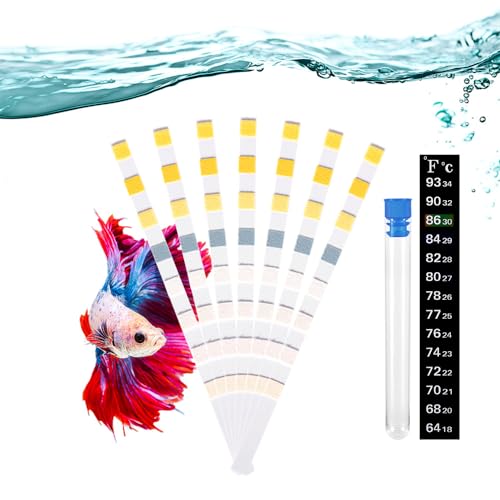
- Includes 125 test strips
- Comes with a thermometer and test tube
- Checks seven core water parameters
Best For: Frequent nano tank testing on a larger strip supply
Broadest Parameter Coverage

- Tests nine parameters, including iron and copper
- Suitable for freshwater and saltwater systems
- 100 strips with results in about 60 seconds
Best For: Nano tanks needing wider metal and water-quality screening
Most Comprehensive Coverage

- Tests 10 key water parameters
- Includes 100 strips and an ebook
- Works with freshwater and saltwater setups
Best For: Nano-tank owners wanting broad routine water testing
Best Value for Routine Checks

- Includes 100 test strips
- Covers seven common parameters
- Uses a quick 2-second dip process
Best For: Freshwater nano tanks needing frequent basic checks
Best for Ammonia Monitoring
- Tests ammonia plus eight total measurements
- Uses double-sealed moisture protection
- Includes 100 strips and a thermometer
Best For: Nano tanks where ammonia tracking is a priority
Best Comprehensive Kit – API Freshwater Master Test Kit
API Freshwater Master Test Kit 800-Test Freshwater Aquarium Water Kit, White, Single, Multi-Colored
Check Price On AmazonFor aquarists seeking aquarium test kits for nano tanks, the API Freshwater Master Test Kit offers a solution-based approach to tracking the core chemistry that can affect freshwater fish. It tests five key parameters and is intended for weekly monitoring or troubleshooting water and fish problems.
Best For: Freshwater nano-tank owners who want detailed testing for ammonia, nitrite, nitrate, pH, and high-range pH.
Pros:
- Tests five important freshwater water parameters.
- Includes seven testing-solution bottles, four capped tubes, and a color card.
- Designed for regular weekly monitoring and problem-solving.
Cons:
- For freshwater aquariums only.
- Solution-based testing requires following the individual test instructions.
This is the most complete option in this group for freshwater nano tanks when ammonia and the nitrogen cycle are priorities. Its multi-step format is less instant than strips, but it provides broader core-parameter coverage.
Best Bulk Strips – 175-Count 8-Way Aquarium Test Strips
These aquarium test kits for nano tanks are built for frequent, quick checks without mixing chemicals. Each strip measures eight parameters, and the 175-count package is convenient for aquarists who want a substantial supply for routine testing.
Best For: Freshwater or saltwater aquarium owners who prioritize fast, broad screening and a large strip supply.
Pros:
- Tests ammonia-nitrogen, pH, alkalinity, carbonate, hardness, free chlorine, nitrate, and nitrite.
- Includes 175 strips for regular testing.
- Uses a dip-and-compare process with a sealed, moisture-proof case.
- Long handle helps keep hands dry during testing.
Cons:
- The instructions require different wait times for different pads.
- Does not use solution-based testing for the parameters listed.
For nano-tank keepers who test often, the large count and eight-way coverage offer convenience. Follow the timing instructions carefully, especially because the pads are read at different intervals.
Best Versatile Strips – Tetra EasyStrips Complete Test Kit
The Tetra EasyStrips kit is a straightforward choice among aquarium test kits for nano tanks, combining seven water checks with a simple 60-second read time. It works in both freshwater and saltwater aquariums and includes separate ammonia strips.
Best For: Nano-aquarium owners who want a quick, all-in-one strip kit for freshwater or saltwater tanks.
Pros:
- Checks ammonia, nitrate, nitrite, hardness, chlorine, alkalinity, and pH.
- Includes 25 six-in-one strips plus 25 ammonia strips.
- Suitable for freshwater and saltwater aquariums.
- Results are read after a 60-second wait.
Cons:
- Contains 25 of each strip type, so the supply is smaller than a bulk 175-strip pack.
- Requires separate ammonia strips rather than measuring all seven listed tests on one strip.
This kit balances broad coverage and convenience for routine checks, particularly if your nano tank may be freshwater or saltwater. Its included ammonia strips add useful coverage beyond the standard multi-test strip.
Best Simple Monitor – API 5-in-1 Aquarium Test Strips
For basic aquarium test kits for nano tanks, API 5-in-1 Test Strips provide a fast dip-and-read way to monitor several common water parameters. The strips cover pH, nitrite, nitrate, carbonate, and general hardness in freshwater or saltwater aquariums.
Best For: Aquarists who want simple weekly monitoring of pH, nitrogen compounds, and hardness-related readings.
Pros:
- Measures pH, nitrite, nitrate, carbonate, and general hardness.
- Works in freshwater and saltwater aquariums.
- Simple dip-and-read color comparison method.
Cons:
- The supplied package contains only four test strips.
- Does not test ammonia.
This is a compact option for quick routine checks when you mainly need the listed five readings. Because ammonia is not included, it may be better as a basic monitoring tool than as a sole kit for diagnosing every nano-tank water problem.
Ammonia-Aware All-Rounder – 8-Way Aquarium Test Strips
For aquarium test kits for nano tanks, this EASYTEST option offers broad routine monitoring in a compact strip format. It checks eight parameters, including ammonia nitrogen, and provides a graded color chart for quick at-home readings in freshwater or saltwater setups.
Best For: Nano tank owners who want ammonia coverage and broad freshwater, shrimp, planted, or marine testing without extra equipment.
Pros:
- Tests eight metrics, including ammonia, pH, hardness, alkalinity, chlorine, nitrate, nitrite, and carbonate.
- Includes 50 strips and works with freshwater, saltwater, betta, shrimp, planted, and pond environments.
- Uses a three-step process, with most readings available at 15 seconds and nitrate/nitrite readings at 60 seconds.
Cons:
- The ammonia pad should be cut off for accurate ammonia testing.
- Results depend on comparing strip colors with the supplied chart.
This is a practical choice when ammonia is a priority and you want one strip to cover several common water-quality checks. Its broad compatibility also makes it useful for households managing more than one type of small aquarium.
Best Value Pack – 7-in-1 Aquarium Test Kit
This 7-in-1 kit is a convenient pick among aquarium test kits for nano tanks, especially if you test regularly. The 125-strip supply covers core parameters and comes with a test tube, thermometer, bottle, and color chart for straightforward home testing.
Best For: Nano aquarium keepers who want a large supply of strips plus a thermometer and test tube for routine freshwater or saltwater checks.
Pros:
- Includes 125 strips testing nitrate, nitrite, chlorine, hardness, alkalinity, carbonate, and pH.
- Comes with a test tube with cap, thermometer, bottle, and color card.
- Delivers results in about 30–60 seconds after a two-second dip and horizontal hold.
Cons:
- Does not list ammonia, iron, or copper among its seven tested parameters.
- The cap should be tightened after removing a strip.
Its strongest advantage is quantity: 125 strips can support frequent monitoring without quickly running out. Choose it when the included thermometer and core parameter coverage matter more than ammonia-specific testing.
Broadest Parameter Coverage – 9-in-1 Water Test Kit
For shoppers comparing aquarium test kits for nano tanks, this 9-in-1 kit stands out for its wider parameter list. It tests pH, nitrate, nitrite, hardness, chlorine, iron, copper, alkalinity, and carbonate in both freshwater and saltwater systems.
Best For: Nano tank owners who want to screen for metals such as iron and copper alongside standard water-quality parameters.
Pros:
- Tests nine parameters, including iron and copper in addition to common aquarium metrics.
- Suitable for freshwater and saltwater aquariums, planted tanks, breeding tanks, ponds, and reef systems.
- Provides results in about 60 seconds using fiber strips and a detailed color chart.
Cons:
- Ammonia is not included in the listed nine parameters.
- The kit contains 100 strips and does not list a separate thermometer or test tube.
This is a strong fit when metal screening is useful for your maintenance routine or livestock choices. If ammonia testing is essential, pair it with an ammonia-specific test rather than relying on this kit alone.
Most Comprehensive Coverage – 10-in-1 Aquarium Test Strips
For shoppers comparing aquarium test kits for nano tanks, this 10-in-1 strip kit offers broad coverage in a quick dip-and-compare format. It tests pH, iron, chlorine, hardness, carbonate, nitrate, nitrite, alkalinity, copper, and temperature, making it useful when you want a wide snapshot of water conditions from one kit.
Best For: Nano-tank owners who want the widest listed range of routine water checks, plus an included ebook for additional guidance.
Pros:
- Tests 10 water parameters, including temperature.
- Includes 100 strips, split between a bottle and separate bag for freshness.
- Color chart supports quick at-home comparisons.
- Suitable for freshwater, saltwater, betta tanks, and ponds.
Cons:
- The manufacturer recommends using opened strips within three months for maximum accuracy.
- The broad parameter list may be more than needed for simple routine checks.
This is a versatile choice if you want one compact testing kit to cover many common aquarium measurements. The included testing tube, thermometer, instruction manual, and ebook add practical support for regular monitoring.
Best Value for Routine Checks – 7-in-1 Freshwater Test Strips
If you need aquarium test kits for nano tanks without an overly complex testing routine, this 7-in-1 option focuses on common water-quality measurements. The 100-strip supply tests nitrate, nitrite, hardness, free chlorine, pH, carbonate, and total alkalinity, with results read against the included bottle chart.
Best For: Freshwater nano-tank keepers who want a straightforward, high-count strip kit for frequent testing.
Pros:
- Provides 100 test strips for repeated water checks.
- Tests seven commonly monitored parameters.
- Simple process: dip for two seconds, wait 15–30 seconds, and compare colors.
- Includes a test tube and thermometer sticker.
Cons:
- It does not list ammonia or temperature testing as strip parameters.
- The supplied description emphasizes freshwater use, although it also lists saltwater compatibility.
This kit suits aquarists who prioritize simple, repeatable testing and a generous strip count. Its no-color-bleeding pad and stated two-year lifetime guarantee may also appeal to buyers seeking consistent, low-effort monitoring.
Best for Ammonia Monitoring – DaToo 8-in-1 Test Strips
Among aquarium test kits for nano tanks, the DaToo 8-in-1 kit stands out by including ammonia testing alongside an extra thermometer measurement. Its strips cover pH, ammonia, alkalinity, carbonate, hardness, free chlorine, nitrate, and nitrite, while the listed testing process is designed for quick home use.
Best For: Nano-aquarium keepers who specifically want ammonia included in a broader strip-based water check.
Pros:
- Covers eight water parameters plus temperature.
- Includes ammonia testing, which is useful for monitoring sensitive aquarium conditions.
- Double-sealed packaging is designed to protect strips from moisture.
- Thickened fiber paper is described as tear-resistant and resistant to color bleeding.
Cons:
- Ammonia results require a longer wait of two to three minutes.
- Results still require comparison with the bottle’s color chart.
The DaToo kit is a practical pick when ammonia is a priority but you still want several other routine readings in the same package. Its 100-strip size and moisture-protection packaging support regular testing, while the separate thermometer expands the information available from each check.
How We Picked the Best Aquarium Test Kits for Nano Tanks
We focused on kits that cover the core parameters of a nano aquarium: ammonia, nitrite, nitrate, and pH. We also considered hardness, alkalinity, chlorine, and other readings when included. The selection represents both liquid test kits, which generally offer more controlled results, and test strips, which are faster and simpler for routine checks.
Other factors included the number of tests provided, freshwater or saltwater compatibility, readability, included accessories, storage convenience, and overall value. Because nano tanks have limited water volume and can experience rapid changes, ease of frequent testing was an important consideration.
Quick Comparison
| Kit Type | Best For | Main Advantage | Trade-Off |
|---|---|---|---|
| Liquid reagent kit | New tanks and precise monitoring | More detailed color matching | Slower and less convenient |
| 5-in-1 strips | Basic routine checks | Fast, simple testing | Fewer parameters |
| 7-in-1 to 10-in-1 strips | Broad water screening | Many readings in one test | Color interpretation can vary |
| Ammonia-inclusive strips | Fish-in cycling and problem checks | Convenient ammonia monitoring | Results may be less precise than liquid tests |
Key Buying Factors for Aquarium Test Kits for Nano Tanks
Parameters Covered
Ammonia and nitrite are especially important in newly established or unstable tanks because both can harm aquatic life. Nitrate helps you judge waste buildup and water-change timing. pH is useful, while hardness and alkalinity matter when keeping shrimp, snails, or species with specific water requirements.
Strips Versus Liquid Tests
Test strips are ideal for quick checks and frequent maintenance. They require little equipment and produce results in seconds, but humidity, timing, and color matching can affect accuracy. Liquid kits take more effort but are often preferable when cycling a tank, investigating illness, or confirming an unexpected reading.
Freshwater or Saltwater Compatibility
Choose a kit designed for your aquarium type. Some products support both freshwater and saltwater, while others are intended specifically for freshwater. Make sure the listed test ranges suit your livestock and water source.
Test Quantity and Storage
Nano tanks benefit from regular monitoring, particularly after setup, stocking, medication, or major maintenance. A larger count can lower the cost per test. Keep strips sealed and dry, and close liquid reagents tightly so moisture, light, and age do not compromise results.
Who Should Buy Which Aquarium Test Kits for Nano Tanks?
Choose a liquid master kit if you are cycling a new aquarium, troubleshooting a water-quality issue, or want more confidence in individual readings.
Choose basic 5-in-1 strips if your tank is mature and stable and you want quick checks during weekly maintenance.
Choose a 7-in-1, 8-in-1, 9-in-1, or 10-in-1 strip kit if you want broader screening for hardness, alkalinity, chlorine, or other additional parameters in one compact package.
Choose an ammonia-inclusive kit for recently set-up tanks, heavily stocked nano aquariums, or situations where ammonia is a primary concern. For any concerning result, retest carefully and consider confirming it with a liquid reagent test before making major changes.