Evaporation can quickly change salinity and water levels, especially in reef tanks with open sumps. The best float aquarium auto top-off systems replace that lost water automatically, helping maintain more consistent conditions with less daily maintenance.
This roundup compares 10 options, from simple power-free float-valve systems to smart pump-driven and dual-sensor controllers. Use the buying guide below to match the system’s safety features, installation requirements, and capacity to your aquarium.
Best 10 Float Aquarium Auto Top Off Systems Picks for 2026
Compact Safety Pick

- 1 mm precision sensing
- QST anti-overflow protection
- Two-year warranty
Best For: Compact reef and freshwater tanks
Power-Free Choice

- No electricity required
- Adjustable 0.5–15 cm water level
- Includes 20-foot water tube
Best For: Simple RO-fed aquarium replenishment
Precision Sensor Pick
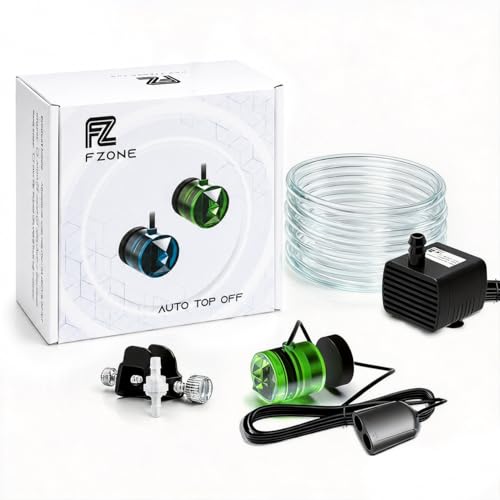
- Dual optical sensors
- 2-meter pump lift
- QST 2.0 dry-run protection
Best For: Precision-focused reef and freshwater tanks
Best Precision Pick

- Dual sensors help maintain consistent water levels.
- Overfill, sensor, and low-reservoir alerts add protection.
- Includes a 74 GPH pump, tubing, magnets, and check valve.
Best For: Freshwater or saltwater tanks needing precise, powered top-off control.
Best No-Power Option
Blue Bottle-Fed Aquarium Auto Top Off

- Uses differential pressure without electricity.
- Works with 0.5- to 1.5-liter plastic bottles.
- Compact design suits compatible nano tanks.
Best For: Small, compatible tanks and travel use without an electric pump.
Best Smart Alarm System

- Multiple alarms flag common refill and equipment problems.
- Includes a sensor, submersible pump, and controller.
- 12-volt operation and a 30-minute pause function.
Best For: Saltwater tanks and sumps needing active fault monitoring.
Best Complete Kit

- Complete kit includes pump and power adapter
- Dual floats add overfill protection
- Fits aquarium walls up to 5/8 inch
Best For: Evaporation-prone sumps needing a ready-to-install ATO
Best Integrated Design
Smart Aquarium Water-Level Controller

- Plug-and-play operation with no settings
- Dual-float protection helps prevent overfilling
- Adjustable bracket fits walls up to 5/8 inch
Best For: Straightforward fish, reef, and sump installations
Best Smart Refiller

- Includes pump and ETL-listed adapter
- Backup float supports overfill protection
- Maximum lifting height listed at 78.74 inches
Best For: Sump owners wanting an included-hardware automatic refiller
Compact Safety Pick – Blue Automatic Top-Off System
This compact option is designed for freshwater and saltwater setups where stable water levels matter. Among float aquarium auto top off systems, it stands out for its 1 mm precision sensing, rimmed- and rimless-tank compatibility, and safeguards intended to reduce overfilling and dry-running risks.
Best For: Reef and freshwater aquariums needing a compact, automatically monitored top-off system.
Pros:
- Maintains water level to help limit salinity fluctuations.
- Compact 0.7-inch sensor fits rimmed tanks, rimless tanks, and sumps.
- QST protection provides alerts and stops the pump if filling takes unusually long.
- Includes a two-year warranty and responsive customer support.
Cons:
- Requires electrical power and a separate water reservoir.
- The supplied notes do not specify the pump’s flow rate or lifting height.
Choose this model if space efficiency and built-in protective monitoring are higher priorities than detailed pump-capacity specifications.
Power-Free Choice – MALIDA Float Valve Controller
This MALIDA controller uses a float valve rather than an electric pump, making it a practical choice for automatically replenishing aquarium water without electricity. It supports adjustable installation on tanks or sumps and connects to an RO water source or a standard water container.
Best For: Aquarium owners who want a power-free water-level controller with flexible mounting.
Pros:
- Operates automatically without electricity.
- Adjustable for water levels from 0.5 to 15 cm.
- Float valve uses an engineering-plastic adjustment shaft designed to resist corrosion.
- Includes an 8-meter, 20-foot tube and quick-push connectors.
Cons:
- Requires a compatible water source, such as an RO system or water bucket.
- Float-valve systems may be less suitable for buyers seeking electronic sensor alerts.
- The listed tank-volume detail is only 1.5 liters, so fit should be checked for larger setups.
This is a straightforward alternative to powered float aquarium auto top off systems, especially when simple plumbing and no electricity are preferred.
Precision Sensor Pick – FZONE Dual Optical ATO
The FZONE ATO uses dual optical sensors and several monitoring technologies to keep aquarium water levels stable. It is a strong candidate among float aquarium auto top off systems for users who want compact installation, real-time sensing, pump protection, and enough lift for larger aquariums.
Best For: Reef and freshwater aquariums needing precise electronic monitoring and flexible installation.
Pros:
- Dual optical sensors provide less-than-1 mm sensing precision.
- Fits rimmed or rimless aquariums and supports wall thickness up to 20 mm with its magnet.
- QST 2.0, EFTT, and AFT technologies help prevent unnecessary pumping, overfilling, and dry running.
- The 74 GPH pump lifts water up to 2 meters and includes a check valve.
Cons:
- Requires electrical power and a separate reservoir.
- Electronic controls and multiple technologies may be more setup than a basic float valve.
With its strong magnet, check valve, and specified pump capacity, this model is well suited to buyers prioritizing precision and installation flexibility.
Plumbing Component Pick – NSF 1/4-Inch Float Valve System
This power-free auto-top-off component is built around a 1/4-inch water line and quick-connect fittings. For shoppers comparing float aquarium auto top off systems, its main appeal is food-grade, BPA-free POM construction with NSF and SGS certification for water-contact applications.
Best For: DIY aquarium plumbing projects using a compatible 1/4-inch water line or RO system.
Pros:
- Designed for standard 1/4-inch, 6.4 mm water lines.
- Uses food-grade, BPA-free POM material with NSF and SGS certification.
- Oval-collet quick connects make disconnection and maintenance easier.
- Suitable for RO filters and other compatible water-dispensing applications.
Cons:
- The supplied notes describe fittings and a valve component rather than a complete powered ATO kit.
- Requires a compatible 1/4-inch water line and water source.
- Does not list electronic sensors, pump specifications, or alarm features.
Consider this option when you are assembling or replacing a power-free float-valve setup and need certified, easy-disconnect 1/4-inch plumbing parts.
Best Precision Pick – FZONE QST2.0 Aquarium ATO
For aquarists comparing float aquarium auto top off systems, the FZONE QST2.0 is a feature-rich option for maintaining stable water levels in freshwater or saltwater tanks. Its dual-sensor design, overfill protection, and included pump and tubing support a relatively straightforward setup.
Best For: Rimmed, rimless, or sump aquariums with wave fluctuations under 1 cm.
Pros:
- Dual sensors monitor water levels with a stated 0.6 cm difference.
- Includes real-time overfill protection, sensor alerts, and low-reservoir detection.
- Compact pump provides up to 74 gallons per hour and a 2-meter lift height.
- Includes magnets, check valve, and 6-foot tubing.
Cons:
- Requires a power connection and a separate water reservoir.
- Recommended for tanks with wave fluctuations below 1 cm.
- Magnetic mounting is specified for walls up to 0.78 inches thick.
The FZONE stands out when precise monitoring and safety features matter more than the simplest possible design. Its pump capacity and included accessories make it a practical choice for regular use or travel periods.
Best No-Power Option – Blue Bottle-Fed Aquarium Auto Top Off
This bottle-fed option offers a simple alternative for shoppers seeking float aquarium auto top off systems without electricity. It uses differential pressure and a household 0.5- to 1.5-liter plastic bottle to replenish smaller aquariums.
Best For: Nano tanks and compatible rimless aquariums where a low-cost, non-electric setup is preferred.
Pros:
- Operates without electricity, a pump, or an electronic sensor.
- Uses readily available plastic water bottles as the reservoir.
- Adjustable tubing helps set the water level, and the built-in device reduces noise.
- Corrosion-resistant ABS is suitable for freshwater and saltwater use.
Cons:
- Incompatible with rimmed and curved fish tanks.
- Bottle threads may not match, and smaller reservoirs limit capacity.
- For tanks longer than 40 cm, using two refillers is recommended.
Its main advantage is simplicity: there are no electrical components to fail and no pump to maintain. Check the tank shape, wall thickness, and bottle-thread compatibility before buying.
Best Smart Alarm System – Smart Aquarium ATO With Pump
For aquarists who want active monitoring, this smart system combines a water-level sensor, submersible pump, and controller in a 12-volt setup. Among float aquarium auto top off systems, it is notable for its alarm functions and pause control.
Best For: Saltwater aquariums and sumps up to 5/8 inch (16 mm) thick that benefit from fault alerts.
Pros:
- Alarms can identify an empty reservoir, leak, stuck float, timeout, pump disconnection, or short circuit.
- Includes the sensor, pump, and controller for a complete installation.
- Pause control stops refilling temporarily and resumes automatically after 30 minutes.
- Electromagnetic sensing is designed to resist interference from duckweed and water plants.
Cons:
- Requires correct placement of the siphon-breaking joint in the reservoir.
- The supplied stand is specified for tanks up to 5/8 inch thick.
- Needs electrical power, unlike a bottle-fed mechanical refiller.
This is a sensible choice when troubleshooting feedback and controller access are priorities. Installation requires attention to siphon-break placement, but the complete kit and multiple alarms can simplify ongoing monitoring.
Best Complete Kit – Smart Dual-Float Aquarium ATO
If you want a ready-to-install option among float aquarium auto top off systems, this smart ATO kit includes the pump, power adapter, holder, and water-level controls. Its adjustable bracket fits aquariums up to 5/8 inch thick and supports sump water levels 0–6.7 inches below the sump top.
Best For: Aquarium keepers who want a complete, corded ATO kit for evaporation-prone sumps.
Pros:
- Includes the pump and ETL-listed power adapter for plug-and-play setup.
- Dual float sensors provide backup overfill protection.
- Relay control automatically starts and stops the pump as water levels change.
- Optional siphon-break installation helps address backflow concerns.
Cons:
- Requires a corded electrical connection.
- The holder is limited to aquariums up to 5/8 inch thick.
- Siphon-break setup may be needed depending on reservoir and tubing placement.
With its included components, adjustable holder, and dual-float design, this is a practical all-in-one choice for maintaining stable sump levels. Check the installation requirements before buying, especially if your tank rim is thicker than 16 mm.
Best Integrated Design – Smart Aquarium Water-Level Controller
This integrated model is one of the simpler float aquarium auto top off systems to install, with a plug-and-play design and an adjustable bracket for tanks up to 5/8 inch thick. It automatically activates the included pump when the water level drops and shuts it off at the upper level.
Best For: Fish, reef, and sump setups where straightforward installation and automatic shutoff are priorities.
Pros:
- Integrated design requires no user settings.
- Dual-float sensing provides a second level of overfill protection.
- Relay control helps protect the pump and water-level switch.
- Adjustable bracket supports water-level positioning from 0–6.7 inches below the tank top.
Cons:
- Designed for wall thicknesses no greater than 5/8 inch.
- The supplied details identify the water pump as an included component but do not list a power adapter.
- Its rectangular ABS housing may not suit every installation space.
The no-setting integrated design makes this a convenient choice for users who prefer a simple controller. Confirm the tank dimensions and available installation space before selecting it for a reef or sump system.
Best Smart Refiller – DIGITEN Dual-Float ATO System
The DIGITEN ATO is a complete option among float aquarium auto top off systems, using dual float sensors and relay control to maintain sump water levels automatically. It includes a pump and ETL-listed power adapter, while the adjustable holder fits aquarium walls up to 5/8 inch thick.
Best For: Aquarium and sump owners seeking an automatic refiller with included hardware and backup float sensing.
Pros:
- Includes the pump and ETL-listed power adapter.
- Dual float balls provide backup protection if the first float fails.
- Adjustable holder accommodates different water levels.
- Rated for a maximum lifting height of 78.74 inches.
Cons:
- Requires installation on aquarium walls no thicker than 5/8 inch.
- The siphon break is optional but may be necessary with certain tubing and reservoir arrangements.
- The supplied specifications contain an unusual battery-powered listing alongside 12-volt DC details, so buyers should verify the power setup.
This model offers useful installation flexibility and a backup float design in a compact sump-oriented package. Its included accessories make setup easier, but review the power specifications and plan tubing placement carefully before installation.
How We Picked the Best Float Aquarium Auto Top Off Systems
We focused on the features that matter most in everyday aquarium use: dependable water-level detection, compatibility with saltwater and freshwater setups, installation flexibility, pump or valve design, overflow protection, and ease of maintenance. The selection includes both powered systems with electronic or optical sensors and power-free models that use a float valve and water pressure.
Because aquarium plumbing varies widely, we also considered whether a system is better suited to a sump, reservoir, or direct water-line installation. Always verify tubing size, water pressure requirements, reservoir placement, and the manufacturer’s operating limits before connecting an ATO.
Quick Comparison
| System type | Best for | Main advantage | Potential trade-off |
|---|---|---|---|
| Powered pump ATO | Most reef and sump setups | Flexible reservoir placement | Needs electricity and pump maintenance |
| Dual optical-sensor ATO | Users wanting electronic monitoring | Precise level detection and redundancy | Sensor surfaces must stay clean |
| Float-valve ATO | Pressurized water-line installations | No pump or controller power required | Requires suitable water pressure and fail-safe plumbing |
| Smart ATO controller | Convenience-focused aquarists | Automated control with added monitoring features | More components and setup complexity |
Key Buying Factors for Float Aquarium Auto Top-Off Systems
Sensor and Fail-Safe Design
Choose a system with a reliable float, optical sensor, or combination of sensors. Look for maximum-run timers, low-water protection, overflow prevention, and an alarm when available. These safeguards help limit the damage from a stuck sensor, blocked line, or empty reservoir.
Water Source and Installation
Pump-based models draw water from a reservoir and work well when the source cannot sit above the tank. Float-valve systems connect to a pressurized water line and may be simpler, but they need a properly regulated supply. Install the outlet where a small dosing error cannot flood the aquarium or sump.
Saltwater Compatibility and Maintenance
For reef tanks, use corrosion-resistant fittings and keep the freshwater reservoir separate from saltwater equipment. Clean optical sensors and float mechanisms regularly to prevent algae, mineral deposits, or debris from causing inaccurate readings. Inspect tubing and check valves during water changes.
Capacity, Flow, and Noise
Match pump output and tubing to the aquarium’s evaporation rate rather than choosing the most powerful option. A slower, controlled refill is generally easier to manage. Consider pump noise if the aquarium is in a bedroom, office, or living area.
Who Should Buy Which Float Aquarium Auto Top Off Systems?
Choose a pump-driven smart ATO if you want the broadest installation flexibility and convenient automatic refilling. A dual optical-sensor model is a strong choice for reef keepers who prioritize electronic level accuracy and added monitoring. Select a power-free float-valve system when you have a suitable regulated water line and want fewer electrical components. For smaller or simpler tanks, a basic automatic water-level controller may provide the needed evaporation control without unnecessary features.
Whichever option you choose, treat an ATO as a maintenance aid rather than a substitute for supervision. Test the system in short intervals, keep the reservoir appropriately sized, and confirm that every shutoff and overflow safeguard works before leaving the aquarium unattended.