Stable pH is essential for aquarium health, but checking it manually can be time-consuming and may miss gradual changes. The best pH aquarium controllers combine accurate sensing with alerts, automated dosing, temperature compensation, or remote monitoring.
This roundup compares 10 options, from straightforward pH meters and replacement probes to connected controllers that can manage dosing equipment. Use the guide below to match features, compatibility, and automation level to your tank.
Best 10 Ph Aquarium Controllers Picks for 2026
Reliable Dosing Control

- Dedicated pH controller and doser
- Includes probes and calibration sachets
- Readable LED display
Best For: Straightforward aquarium pH dosing
Easy Manual Monitoring
Digital Combo pH & Temperature Meter

- Measures pH and temperature
- Three-point automatic calibration
- Replaceable pH probe
Best For: Manual fish tank water checks
Connected Automated Dosing
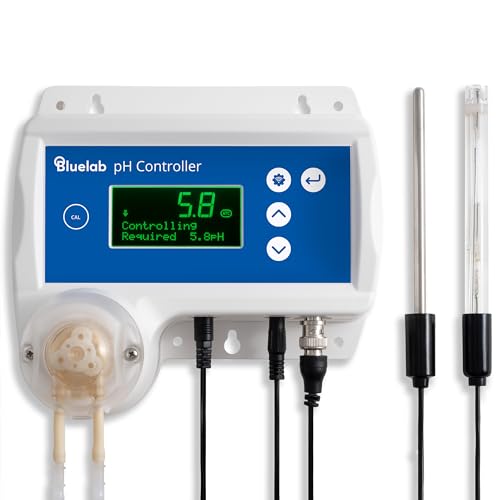
- Remote smartphone monitoring
- Built-in precision dosing pump
- Alarms and dosing lockouts
Best For: Remote automated reservoir control
Multi-Parameter Smart Control

- Monitors pH, ORP, and temperature
- Tuya app remote access
- Dual relay equipment control
Best For: Connected multi-parameter water monitoring
Precision Dosing Pick
AC Infinity Peristaltic Dosing Pump

- 10-level dosing control
- Up to 210 mL per minute
- Compatible with AI and UIS controllers
Best For: Programmable aquarium liquid dosing
All-in-One Monitoring Pick
Smart EC pH Temperature Monitor

- Tracks pH, EC, and temperature
- Dual relay auto-adjustment
- Tuya Wi-Fi alerts and data graphs
Best For: Remote aquarium water-quality monitoring
Expandable Sensor Pick
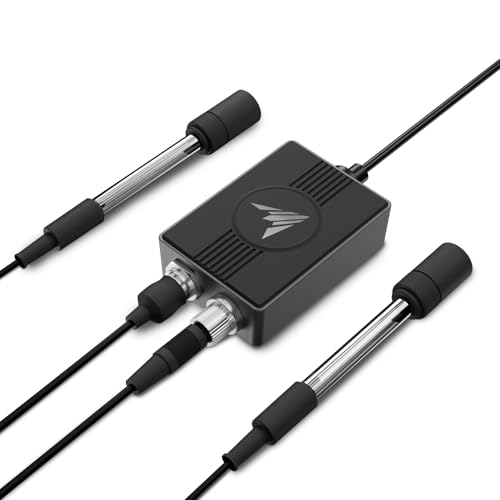
- Measures pH, EC, TDS, and temperature
- Interchangeable probes
- Designed for UIS AI controllers
Best For: AC Infinity ecosystem monitoring
Best Dual-Relay Controller
Smart pH Controller with Dosing Pump

- Dual relay control for pH up and down
- Automatic temperature compensation
- Three-day trend and MAX/MIN/AVG display
Best For: Automated aquarium or hydroponic pH management
Best Replacement Probe

- Direct replacement for American Marine Pinpoint units
- Works in freshwater, saltwater, and ponds
- Real-time pH monitoring
Best For: Compatible Pinpoint controller owners needing a probe
Best Wall-Mounted Option
Automatic pH Controller with Dosing Pump

- Wall-mounted dual-relay dosing control
- Three-day pH and temperature chart
- MAX/MIN/AVG and dose-count functions
Best For: Detailed aquarium or nutrient-reservoir monitoring
Reliable Dosing Control – Milwaukee MC122 pH Controller
For shoppers comparing ph aquarium controllers, the Milwaukee Instruments MC122 is a purpose-built option that combines pH control and dosing in one compact unit. Its LED display and included calibration sachets support straightforward setup and routine monitoring.
Best For: Aquariums and water setups that need a dedicated pH controller with dosing functionality.
Pros:
- Combines pH controller and pH doser functions.
- Includes a controller, pH probes, and calibration sachets.
- Uses an easy-to-read LED display.
- Compact plastic construction weighs 2 pounds.
Cons:
- The supplied notes do not specify automated scheduling or remote app control.
- Operating temperature is listed at 20 °C, which may limit placement flexibility.
The MC122 is a practical choice when you want dedicated pH dosing hardware without adding app-based features. Its included probe and calibration supplies make it a straightforward starting point for routine pH management.
Easy Manual Monitoring – Digital Combo pH & Temperature Meter
Among ph aquarium controllers, this digital combo meter is better suited to hands-on monitoring than automatic dosing. It measures pH and temperature, offers automatic calibration, and uses a large LCD for quick readings.
Best For: Fish tank owners who want an affordable-style handheld monitor for checking pH and temperature manually.
Pros:
- Measures pH from 0.0 to 14.0 with ±0.1 accuracy and 0.01 resolution.
- Displays both pH and temperature with automatic temperature compensation.
- Supports up to three-point pH calibration with automatic buffer recognition.
- Includes a replaceable pH probe and permanent temperature probe.
Cons:
- It is a meter rather than an automatic dosing controller.
- Requires battery power and manual testing.
This model makes sense when you primarily need dependable spot checks rather than continuous corrective dosing. Its replaceable pH probe and multiple calibration points are useful for ongoing maintenance.
Connected Automated Dosing – Bluelab Wi-Fi pH Controller
For advanced ph aquarium controllers, the Bluelab pH Controller Wi-Fi adds remote monitoring and automated dosing. Its built-in peristaltic pump, phone-based controls, alarms, and safety lockouts are designed for users who want more hands-off reservoir management.
Best For: Connected water-management setups that need remote pH oversight and automated pH-up or pH-down dosing.
Pros:
- Provides 24/7 monitoring and adjustment through a smartphone app.
- Built-in peristaltic pump doses pH adjusters in both alkaline and acidic directions.
- Includes high/low alarms, dosing lockouts, and power-loss auto-resume.
- Variable-speed pump reaches up to 120 ml/min.
Cons:
- Its Wi-Fi and app features may be more complexity than basic aquarium users need.
- The supplied notes emphasize reservoir and plant applications rather than aquarium-specific features.
The Bluelab stands out for users prioritizing automation and remote access. Safety controls and mixing pauses add useful safeguards, while the replaceable probes support longer-term maintenance.
Multi-Parameter Smart Control – Wi-Fi pH ORP Controller
This smart pH ORP controller expands beyond basic ph aquarium controllers by monitoring pH, ORP, and temperature together. Its Tuya Smart app connection and dual relay outputs can automatically operate compatible pumps, valves, ozone generators, or CO2 regulators.
Best For: Aquariums and other water systems that need remote multi-parameter monitoring with relay-based equipment control.
Pros:
- Monitors pH, ORP, and temperature simultaneously.
- Connects to the Tuya Smart app over 2.4 GHz Wi-Fi.
- Dual relays support automatic control of compatible equipment.
- Includes ATC from 0–50 °C, replaceable BNC probes, and fuse protection.
Cons:
- Requires a compatible 2.4 GHz Wi-Fi network for app monitoring.
- Its broader ORP and relay feature set may be unnecessary for simple pH-only setups.
- The supplied notes do not specify probe calibration details.
This is a versatile choice when pH is only one part of your water-quality routine. The combination of app access, dual relays, ATC, and replaceable probes supports more involved aquarium or water-treatment installations.
Precision Dosing Pick – AC Infinity Peristaltic Dosing Pump
For aquarium keepers comparing ph aquarium controllers, the AC Infinity Peristaltic Dosing Pump is a dosing-focused option for delivering measured liquids when pH control matters. Its 10-level control and sealed design support repeatable dosing of buffers, nutrients, and reagents.
Best For: Aquariums that need controlled, programmable liquid dosing alongside a compatible AI or UIS controller.
Pros:
- Delivers precise amounts in 21 mL intervals, up to 210 mL per minute.
- Offers low-noise, energy-efficient operation.
- Supports Wi-Fi app programming in seconds-level intervals with compatible controllers.
- Sealed, leak-free construction is suited to aquariums, hydroponics, and laboratory use.
Cons:
- It is a dosing pump rather than a complete pH monitoring system.
- Controller compatibility is centered on AC Infinity AI and UIS systems.
This is a practical choice when your main need is accurate, repeatable dosing. Pair it with appropriate monitoring equipment if you also need automated pH measurement and alerts.
All-in-One Monitoring Pick – Smart EC pH Temperature Monitor
Among ph aquarium controllers, this 3-in-1 monitor stands out for combining pH, EC, and water-temperature tracking with Wi-Fi access. Its dual relay outputs can automate connected dosing or control equipment while the Tuya app provides alerts and historical data.
Best For: Aquarium and nutrient-reservoir users who want remote monitoring, threshold alerts, and automatic adjustment capabilities.
Pros:
- Continuously monitors pH, EC, and temperature through the Tuya app.
- Uses dual relay outputs for pH Up/Down and nutrient-solution control.
- Supports custom minimum and maximum thresholds with alarms.
- Provides up to 30 days of graphing and data export, plus automatic temperature compensation.
Cons:
- Automatic dosing or CO2 control requires compatible connected equipment such as pumps, solenoid valves, or other devices.
- Wi-Fi monitoring depends on the Tuya app and a Wi-Fi connection.
This model is the most comprehensive standalone option here for users who want measurement and control in one system. Its broad measurement and relay features are useful when remote oversight is a priority.
Expandable Sensor Pick – AC Infinity Hydro Sensor
For shoppers building ph aquarium controllers around the AC Infinity ecosystem, the Hydro Sensor adds continuous measurement of pH, EC, TDS, and water temperature. It is designed for UIS AI controllers, where app connectivity, alerts, data tracking, and automation can extend beyond basic readings.
Best For: AC Infinity AI Controller users who want broader water and nutrient monitoring for aquariums or related systems.
Pros:
- Measures pH, EC, TDS, and water temperature.
- Supports 24/7 monitoring and automatic adjustments through compatible UIS AI controllers.
- Uses interchangeable probes to simplify replacement and reduce downtime.
- Offers Wi-Fi app connectivity, alerts, data tracking, and automation features through the controller.
Cons:
- Requires a compatible AC Infinity AI or UIS controller to access its connected features.
- It is a sensor rather than a standalone controller or dosing pump.
This sensor makes the most sense for an existing AC Infinity setup or a planned UIS-based system. It provides wider water-quality coverage than pH-only monitoring, but its usefulness depends on the controller ecosystem around it.
Best Dual-Relay Controller – Smart pH Controller with Dosing Pump
For shoppers comparing ph aquarium controllers, this model combines pH monitoring, automatic dosing, and dual-relay control in one unit. Its temperature compensation and three-day trend display make it useful for tracking changing water conditions in aquariums or hydroponic systems.
Best For: Aquarium and hydroponic users who want automatic pH up and down management with data tracking.
Pros:
- Dual relay output supports automatic pH up and pH down control.
- Automatic temperature compensation helps maintain consistent readings.
- Displays maximum, minimum, and average data plus three-day pH and temperature trends.
- LCD display and plug-and-play operation simplify monitoring.
Cons:
- The supplied notes do not specify included pH-up or pH-down solutions.
- Its compact display may provide less viewing space than larger wall-mounted units.
This is a versatile choice when you need both monitoring and automated dosing, especially if trend data is important to your routine.
Best Replacement Probe – Pinpoint Aquarium pH Probe
American Marine Pinpoint pH Probe - Aquarium & Pond pH Monitor/Controller Replacement Probe
Check Price On AmazonAmong ph aquarium controllers and monitoring setups, a dependable replacement probe is essential for accurate readings. This Pinpoint probe is designed to replace probes in American Marine Pinpoint pH monitors and controllers and works with freshwater, saltwater, and garden pond applications.
Best For: Owners of compatible American Marine Pinpoint pH monitors or controllers who need a replacement probe.
Pros:
- Designed as a direct replacement for American Marine Pinpoint pH monitors and controllers.
- Suitable for freshwater and saltwater aquariums as well as garden ponds.
- Provides real-time pH readings for prompt water management.
- Built with materials intended for long-term use.
Cons:
- This is a replacement probe rather than a complete pH controller.
- Compatibility is specifically described for American Marine Pinpoint equipment.
If your existing Pinpoint controller needs a new sensing probe, this focused replacement can restore monitoring without replacing the entire system.
Best Wall-Mounted Option – Automatic pH Controller with Dosing Pump
This wall-mounted option stands out among ph aquarium controllers for combining automatic pH dosing with temperature monitoring and historical data. Its dual-relay system can manage pH up and pH down, while the chart display and dosing-count function support more detailed reservoir or aquarium management.
Best For: Users who prefer a wall-mounted controller with automatic dosing, trend charts, and dosing records.
Pros:
- Dual relay output automatically controls pH up and pH down dosing.
- Automatic temperature compensation supports consistent pH measurement.
- Three-day pH and temperature chart helps identify changing conditions.
- MAX/MIN/AVG and dose-count functions add useful measurement and dosing records.
Cons:
- Its larger listed dimensions and 3.08-pound weight may require more installation space.
- The supplied notes do not identify included pH-adjusting solutions.
Choose this model when a dedicated wall-mounted installation and dosing history are more valuable than a compact controller footprint.
How We Picked the Best Ph Aquarium Controllers
We focused on the features that matter most in real aquarium setups: measurement capability, calibration support, temperature monitoring, control outputs, dosing compatibility, connectivity, and replacement-part availability. The selection includes dedicated aquarium controllers, combination meters, Wi-Fi systems, dosing pumps, sensors, and replacement probes because aquarists often need different levels of monitoring and automation.
We also considered installation flexibility and use cases. Some products are better suited to simple spot checks, while others are designed to regulate pH continuously by activating a pump or other equipment. Always confirm that a controller’s probe, relay, voltage, tubing, and dosing method fit your system before buying.
Quick Comparison of These Ph Aquarium Controllers
| Type | Best for | Notable capability |
|---|---|---|
| Dedicated pH controller | Continuous aquarium regulation | pH monitoring with control output |
| Combo pH and temperature meter | Manual testing | Portable readings and calibration |
| Wi-Fi controller | Remote supervision | App access, alerts, or connected control |
| pH/ORP or pH/EC monitor | Advanced water management | Multiple water-quality measurements |
| Dosing pump | Precise chemical delivery | Controlled liquid dosing |
| Probe or sensor | System expansion or replacement | Compatibility with an existing controller |
Key Buying Factors for Ph Aquarium Controllers
Measurement Accuracy and Calibration
Look for automatic or guided calibration and support for standard buffer solutions. A replaceable probe is valuable because probes wear out over time. Temperature compensation can improve consistency, especially when water temperature changes.
Automation and Safety
A controller that only displays pH is different from one that can operate a dosing pump. For automated systems, check whether the unit supports pH-up and pH-down dosing, dual relay outputs, adjustable set points, minimum run times, and high- or low-pH limits. A separate dosing pump may be necessary.
Connectivity and Installation
Wi-Fi and app features are useful for remote alerts, but they should not replace routine testing. Confirm network requirements, probe cable length, mounting options, power connections, and whether the controller works with your aquarium’s existing equipment.
Freshwater, Reef, and Planted-Tank Suitability
Choose a controller based on the stability demands of your aquarium. Reef systems and heavily stocked tanks may benefit from continuous monitoring, while smaller or less sensitive setups may only need a reliable handheld meter. For hydroponic-focused equipment, verify that its control range and dosing design suit aquarium chemicals.
Who Should Buy Which Ph Aquarium Controllers?
- For simple manual checks: Choose a digital pH and temperature meter with dependable calibration.
- For continuous pH control: Select a dedicated controller with relay output and compatible dosing equipment.
- For remote monitoring: Choose a Wi-Fi-enabled controller or sensor system with app notifications.
- For advanced water testing: Consider a pH/ORP or pH/EC monitor if you need more than pH readings.
- For precise chemical delivery: Pair a compatible controller with a reliable peristaltic dosing pump.
- For repairs or upgrades: Buy a replacement probe or aquarium sensor only after confirming connector and controller compatibility.
Whichever system you choose, calibrate it on schedule, keep the probe properly stored, and verify automated dosing with independent tests. Controllers are valuable safety tools, but regular observation and maintenance remain essential.