The right hardscape can transform a freshwater aquarium while giving plants, fish, and decorations a more natural-looking foundation. These 10 options range from dramatic Seiryu and dragon rocks to smooth river stones, slate, and colorful gravel.
Use this roundup to compare rock size, texture, color, quantity, and suitability for planted or community tanks before choosing a substrate or centerpiece.
Best 10 Aquarium Rocks for Freshwater Tanks Picks for 2026
Natural Texture Pick

- Distinct natural patterns and textures
- 5-pound pack with 2- to 6-inch pieces
- Simple to clean and suited to long-term use
Best For: Natural-looking aquascapes with varied hardscape
Fluorescent Color Pick
GloFish Pink, Green & Blue Gravel

- Bright pink, green, and blue mix
- Fluorescent accents glow under blue LEDs
- Usable as substrate or a decorative accent
Best For: Colorful GloFish-themed aquariums
Planting Hardscape Pick

- 4.4-pound set of mixed natural sizes
- Includes at least one 6- to 8-inch stone
- Supports plants, moss, and hiding spaces
Best For: Small planted tanks with shrimp or small fish
Clean Bright Base

- White and pearlescent 5-pound gravel
- Fluorescent accents show under blue LEDs
- Can be used as substrate or an accent
Best For: Bright GloFish tanks with a polished look
Best Textured Hardscape

- Rugged natural texture
- 3–7-inch stackable pieces
- Good plant adhesion
Best For: Bold planted-tank layouts and larger aquascapes
Best Decorative Accent
- Mixed natural colors
- Smooth tumbled finish
- Small accent-friendly size
Best For: Detailed decorative accents and small aquatic layouts
Best Natural River Rock
- Unpolished natural stones
- Smooth and flat surfaces
- 5-pound mixed-color set
Best For: Medium tanks needing simple natural decoration
Natural River Gravel
Polished 1/4-Inch Aquarium Gravel

- 5 pounds of natural 1/4-inch stone gravel
- Non-toxic stones with no dyes, oils, or fillers
- Rounded pieces for simple aquarium layouts
Best For: Freshwater tanks needing a fine, natural gravel base
Large Slate Aquascaping Rock

- 10 pounds of natural polished slate
- Large pieces for caves, cliffs, and mountains
- Inert, rounded-edge rocks for aquatic layouts
Best For: Spacious freshwater tanks needing dramatic rock structures
Medium Slate Aquascaping Rock

- 5 pounds of natural polished slate
- Medium pieces suit compact rock layouts
- Inert stone with rounded, polished edges
Best For: Small-to-medium freshwater tanks needing flexible rockwork
Natural Texture Pick – Seiryu Stone Aquarium Rocks
If you want aquarium rocks for freshwater tanks with a bold, natural appearance, this 5-pound Seiryu stone set offers varied textures and 2- to 6-inch pieces for aquascaping. The stones are intended for aquarium decoration and are easy to clean.
Best For: Aquascapers who want natural-looking hardscape with distinctive patterns.
Pros:
- Each stone has a unique natural pattern and texture.
- Designed for use with aquatic life and plants without altering water quality, according to the supplied product notes.
- Durable stone is suitable for long-term use and requires simple maintenance.
- Can also be used in terrariums, reptile enclosures, gardens, and other decorative settings.
Cons:
- Natural stones vary in appearance, so the exact shapes and patterns will differ.
- The 2- to 6-inch size range may be less suitable for very small aquariums.
This is a versatile hardscape option when visual variation matters more than uniformity. Its mixed natural character can add depth to a planted freshwater layout.
Fluorescent Color Pick – GloFish Pink, Green & Blue Gravel
For aquarium rocks for freshwater tanks with a bright, playful look, this 5-pound GloFish gravel combines pink, green, and blue fluorescent accents. It can serve as a substrate or decorative accent and is designed to stand out under GloFish blue LED lights.
Best For: GloFish aquariums and colorful tanks using blue LED lighting.
Pros:
- Pink, green, and blue mix creates a colorful tank base.
- Fluorescent accents stand out under GloFish blue LED lights.
- Works as either substrate or an accent with compatible plants and ornaments.
Cons:
- Its fluorescent styling may not suit naturalistic aquascapes.
- The product notes identify the pieces as irregular in shape, which may produce a less uniform layout.
This gravel is primarily a visual choice for themed or brightly lit displays. It is most compelling when paired with GloFish décor and blue lighting.
Planting Hardscape Pick – Natural Dragon Rock
This 4.4-pound dragon rock set is a practical option for aquarium rocks for freshwater tanks, especially smaller planted layouts. It includes mixed-size natural stones, including at least one piece measuring 6 to 8 inches, for creating structure, plant supports, and hiding places.
Best For: Planted 2- to 10-gallon aquariums with shrimp, small fish, moss, or rooted plants.
Pros:
- Natural stones provide a varied, organic appearance.
- Mixed sizes can help create hiding places for shrimp and small fish.
- Useful for holding plants and mosses in planted tanks.
- Includes at least one large 6- to 8-inch stone.
Cons:
- Exact stone shapes and colors will vary because every piece is natural.
- The included large stone may be difficult to place in especially small tanks.
- The directions call for clearing or cleaning the stones before use.
This set is well suited to compact aquascapes that need both visual structure and functional planting support. Plan the layout around the larger included piece before adding water.
Clean Bright Base – GloFish Pearlescent Gravel
For a lighter alternative to traditional aquarium rocks for freshwater tanks, this 5-pound pearlescent GloFish gravel provides a white-and-pearl base with fluorescent accents. It is designed to complement aquarium décor and show under GloFish blue LED lights.
Best For: Bright, polished-looking GloFish displays that use blue LED lighting.
Pros:
- White and pearlescent coloring creates a clean, bright foundation.
- Fluorescent accents stand out under GloFish blue LED lights.
- Can be used as a substrate or as an accent around plants and décor.
- Includes clear rinse-before-use directions.
Cons:
- The pearlescent style may be less appropriate for natural-looking aquascapes.
- It must be rinsed thoroughly before use, and the directions specify avoiding soap or detergents.
- Light-colored gravel may show debris more readily than darker substrate.
This gravel makes sense when you want a luminous, tidy-looking tank base rather than rugged hardscape. Its appearance is best showcased with compatible GloFish lighting and décor.
Best Textured Hardscape – Seiryu Stones
For aquascapers seeking aquarium rocks for freshwater tanks, these natural Seiryu stones offer rugged texture and substantial 3–7-inch pieces. Their gray, durable surfaces can form caves, cliffs, or mountain-style layouts, while the uneven texture gives moss and aquatic plants a strong place to attach.
Best For: Freshwater aquariums, planted tanks, shrimp tanks, and larger aquascaping designs that need bold, stackable hardscape.
Pros:
- Natural rugged surfaces and distinctive patterns add realistic visual texture.
- Hard, durable structure is suited to long-term aquascaping.
- Uneven surfaces support moss and aquatic plant attachment.
- Versatile stones can also be used in terrariums and bonsai displays.
Cons:
- The 3–7-inch size may be too large for nano tanks or delicate layouts.
- A 10-pound package may provide more stone than a small aquarium needs.
This is the strongest choice of the three for a dramatic, structured aquascape. Its larger size and textured faces are especially useful when you want plants and hardscape to work together as the centerpiece.
Best Decorative Accent – Polished River Pebbles
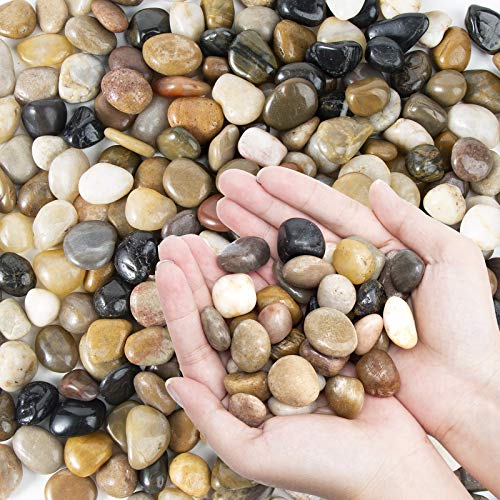
These small polished river pebbles are a flexible option for aquarium rocks for freshwater tanks when you want a softer, decorative finish. The 0.5–1.2-inch mixed-color stones are gently tumbled for smoothness and can add subtle accents to aquariums, water gardens, ponds, and terrariums.
Best For: Small decorative accents, mixed-color layouts, and hobbyists who prefer smooth, rounded-looking gravel over rugged aquascaping stone.
Pros:
- Mixed natural colors include shades of brown, white, and black.
- Small 0.5–1.2-inch size suits detailed decorative placement.
- Gently polished surfaces provide a smooth visual effect.
- Can be used indoors or outdoors for aquariums, gardens, and water features.
Cons:
- The 2-pound quantity may not cover a larger tank floor.
- Natural stones may vary in shape, thickness, and condition.
- These are more suited to accents than large structural formations.
Choose these pebbles when color variety and a polished appearance matter more than building caves or cliffs. They work well as a finishing touch, though larger tanks may require multiple packages.
Best Natural River Rock – 2–3 Inch Mixed River Stones
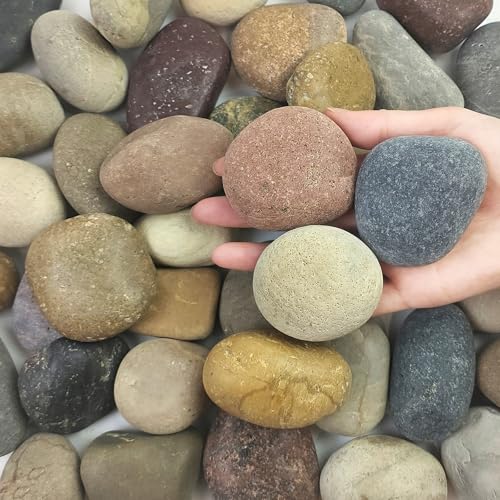
For aquarium rocks for freshwater tanks, this 5-pound collection provides natural, unpolished river stones in a practical 2–3-inch range. The smooth, flat surfaces create a comfortable-looking habitat and offer a simple way to add mixed color and natural form to a tank or planted display.
Best For: Medium-sized freshwater aquariums, natural-looking decorations, and layouts that need larger smooth stones without a polished finish.
Pros:
- Natural, non-toxic, unpolished stones contain no added fillers or dyes.
- Mixed colors, shapes, and sizes create varied visual interest.
- Smooth, flat surfaces are suitable for natural fish or reptile habitats.
- Reusable stones are also suitable for gardens, ponds, and terrariums.
Cons:
- The 2–3-inch stones are too large for very small aquariums.
- A 5-pound package may cover only a limited area in a larger tank.
- Natural variation means individual pieces will not be uniform.
This is a balanced middle-ground option: more substantial than small decorative gravel but less rugged than specialty aquascaping stones. It fits best when you want smooth, natural river-rock character and a moderate amount of coverage.
Natural River Gravel – Polished 1/4-Inch Aquarium Gravel
For shoppers comparing aquarium rocks for freshwater tanks, this 5-pound natural river gravel offers a fine, rounded option for creating a simple, polished-looking base. The stones are described as non-toxic, free of dyes and oils, and sized at approximately 1/4 inch.
Best For: Freshwater tank owners who want small, rounded natural gravel for an understated aquarium layout.
Pros:
- Natural stone with no added fillers, dyes, or oils.
- Rounded, polished pieces are intended to provide a comfortable environment for aquatic pets.
- Small 1/4-inch size works as a fine gravel-style substrate or decorative accent.
- Five-pound quantity can also be used for plants, vases, and other decor projects.
Cons:
- The small gravel format offers less height and structure than larger aquascaping rocks.
- Color is listed as multicolor, so the appearance may be varied rather than uniform.
This is a versatile pick when you want aquarium rocks that function more like a natural gravel layer than a centerpiece stone. Its polished, rounded format suits straightforward layouts, while the extra-use design may appeal to buyers who also need decorative pebbles elsewhere.
Large Slate Aquascaping Rock – 5–7-Inch Polished Slate
If you need aquarium rocks for freshwater tanks that can add height and structure, this 10-pound slate set provides larger 5–7-inch pieces for building prominent layouts. The natural slate is polished and described as inert, with rounded edges after cleaning.
Best For: Aquascapers creating larger cliffs, caves, mountains, or layered terrain in spacious freshwater tanks.
Pros:
- Large 5–7-inch pieces create a strong visual focal point.
- Inert slate is described as not altering water chemistry.
- Polished, rounded edges are designed to reduce risk of harming fish.
- Pieces can be arranged, broken, or secured with aquarium-safe glue.
Cons:
- The larger size may be less suitable for small aquariums or delicate layouts.
- A 10-pound set may be more rock than needed for minimalist arrangements.
This option is geared toward structural aquascaping rather than subtle substrate coverage. Its larger format and stackable design make it useful for dramatic terrain, provided your aquarium has enough room and the finished arrangement is made stable.
Medium Slate Aquascaping Rock – 3–5-Inch Polished Slate
For a more manageable setup, these 5 pounds of 3–5-inch polished slate offer a middle ground between fine gravel and oversized aquascaping stones. They are described as inert, suitable for freshwater and saltwater environments, and smooth-edged after cleaning.
Best For: Small-to-medium aquarium layouts that need moderate-height rocks for caves, ledges, or natural terrain.
Pros:
- 3–5-inch size is easier to scale into compact aquariums than larger slate pieces.
- Inert stone is described as safe for fish, shrimp, plants, and sensitive aquatic environments.
- Polished and rounded edges help create a smoother aquatic habitat.
- Can be arranged, customized, or secured with aquarium-safe glue.
Cons:
- Five pounds provides less coverage than the larger 10-pound version.
- Medium-sized pieces may not create the tallest structures in a large aquarium.
This set is a practical compromise for buyers who want defined rockwork without committing to very large stones. It can support caves and layered layouts while remaining more adaptable to compact tank dimensions.
How We Picked These Aquarium Rocks for Freshwater Tanks
We selected these options to cover the main freshwater hardscape needs: natural stone arrangements, planted-tank accents, bottom-covering gravel, colorful decorative substrate, and larger focal pieces. The lineup includes several sizes and weights so you can match the material to your tank dimensions and intended layout.
Because stone can affect water chemistry, treat product descriptions as a starting point rather than a guarantee. Rinse every rock thoroughly, inspect for sharp edges, and test questionable materials before adding them to an established aquarium.
Quick Comparison
| Rock type | Best suited for | Typical advantage |
|---|---|---|
| Seiryu stone | Natural aquascapes | Strong texture and dramatic gray coloring |
| Dragon rock | Detailed layouts | Distinctive irregular shapes and cavities |
| Slate | Terraces and focal features | Flat surfaces and layered appearance |
| River rocks | Community and planted tanks | Smooth, understated decoration |
| Colored gravel | Decorative setups | Bright, playful visual effects |
Key Buying Factors for Aquarium Rocks for Freshwater Tanks
Size and Quantity
Measure your tank before buying. Large stones create a focal point but can overwhelm nano aquariums, while small gravel is easier to spread across the bottom. Weight also matters: a five-pound bag may be enough for accents, but a larger aquascape may require multiple bags.
Shape and Surface
Choose textured stone for caves, ledges, and visual height; select rounded river rocks when fish may contact the substrate or when you want a softer appearance. Avoid sharp points that could damage delicate fish or tear plant roots.
Water Chemistry and Safety
Some natural stones can raise hardness or pH. This may suit hard-water species but cause problems for fish that prefer softer water. Scrub and rinse rocks, check them for contaminants, and test their effect in a separate container if your livestock has narrow water-parameter requirements.
Stability and Maintenance
Stack heavy pieces securely and place them on the tank base or a protective layer rather than directly on loose substrate when possible. Leave enough open space for cleaning, swimming, and plant growth. Smooth gravel is generally easier to siphon than deeply textured stone.
Who Should Buy Which Aquarium Rocks for Freshwater Tanks?
Choose Seiryu stone for a classic, high-contrast aquascape and dragon rock when irregular texture is your priority. Slate is a strong choice for layered layouts, terraces, and bold centerpiece formations. Pick polished or natural river rocks for a calmer community-tank look, especially when rounded surfaces are preferable.
Colorful GloFish gravel works best for buyers who want a bright decorative theme rather than a strictly natural biotope. Smaller natural gravel is practical for broad bottom coverage and planted displays. Before finalizing your choice, match the stone’s size and quantity to the aquarium, confirm compatibility with your water parameters, and prioritize stable, fish-safe placement.