The right slate aquarium rocks can add structure, contrast, and hiding spaces without overwhelming a tank’s layout. This roundup covers sizes ranging from small accent pieces to large flat stones for layered aquascapes.
Before choosing, consider your aquarium’s dimensions, livestock, substrate, and the amount of stone needed. Flat slate is especially useful for ledges and caves, while smaller pieces work well as accents or filler.
Best 10 Slate Aquarium Rocks Picks for 2026
Best Overall Slate Value

- 12-pound assortment of 5–7-inch slate pieces
- PH-neutral natural stone for aquarium hardscapes
- Useful for custom caves, cliffs, and mountain ranges
Best For: Larger aquariums and creative hardscape builds
Best for Structured Aquascapes

- Six large pieces measuring about 6.1–8.1 inches
- Flat, layered surfaces for terraces and ledges
- Suitable for freshwater aquariums and planted layouts
Best For: Medium and large structured aquascapes
Best Mid-Size Slate Assortment

- 7.5-pound package of 5–7-inch pieces
- PH-neutral natural slate for tank decoration
- Works for custom caves, cliffs, and mountain ranges
Best For: Medium aquarium hardscape projects
Best for Small Tanks
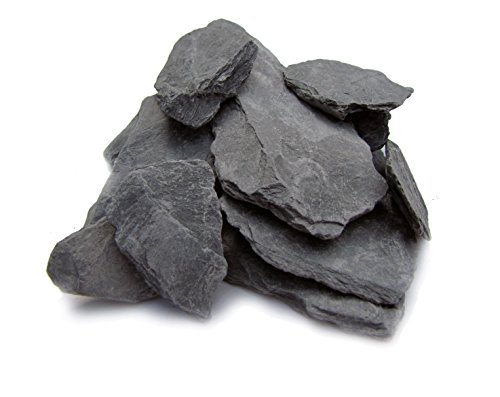
- Two-pound mix of 1–3-inch slate pieces
- Tumbled to smooth sharp edges
- Suitable for nano, planted, and saltwater setups
Best For: Small aquariums, terrariums, and miniature layouts
Best Overall
Natural Slate Aquascaping Rocks

- 5-pound assortment of natural layered slate
- Flat, stackable pieces for caves and cliffs
- Suitable for freshwater and saltwater tanks
Best For: Custom aquarium hardscapes and reptile habitats
Best for Small Layouts

- Small 1/2- to 1-inch natural pieces
- Useful for detailed aquarium and terrarium scenes
- Natural gray color with occasional variation
Best For: Compact tanks and miniature hardscape projects
Best for Large Builds

- 10-pound supply of 3- to 5-inch rocks
- Polished and rounded edges for aquatic use
- Designed for caves, cliffs, and larger terrains
Best For: Large aquarium hardscapes and reptile basking areas
Large-Scale Aquascaping Slate
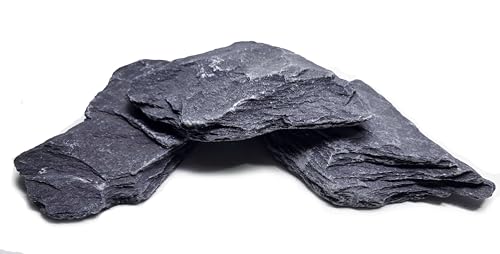
- Natural, uncoated slate
- Large pieces for cliffs and caves
- About 8–9 pounds across 3–4 stones
Best For: Large aquariums, paludariums, and driftwood anchoring
Polished Slate Aquarium Rocks

- Polished and rounded edges
- Suitable for freshwater and saltwater tanks
- 10-pound set for varied terrain layouts
Best For: Medium-to-large aquascapes and smoother habitat décor
Compact Aquascaping Slate

- 3-pound set with mixed sizes
- pH-neutral natural slate
- Useful for detailed caves and terrain
Best For: Small aquariums, terrariums, and compact pet habitats
Best Overall Slate Value – 12 lb Natural Slate Rocks
If you need a substantial supply of slate aquarium rocks for a custom aquascape, this 12-pound assortment offers natural variation in 5–7-inch pieces. The stones are hand picked, inspected, and washed, with a PH-neutral profile suited to aquarium decoration and other hardscape projects.
Best For: Building larger aquarium caves, cliffs, mountain ranges, and natural-looking hardscapes.
Pros:
- Generous 12-pound quantity for larger projects.
- Natural shapes include both thick and thin, large and small pieces.
- Can be joined with aquarium-safe glue to create custom structures.
- Suitable for aquariums, amphibian enclosures, ponds, and landscaping models.
Cons:
- Natural shapes and sizes are not uniform.
- Individual pieces may be bulky for small or nano aquariums.
This is a versatile bulk option when you want enough slate to experiment with several layouts. Its varied shapes are useful for creative builds, though precise, uniform stacking will require selecting pieces carefully.
Best for Structured Aquascapes – Large Flat Slate Rock Set
These slate aquarium rocks are designed for structured layouts, with six large, flat pieces measuring about 6.1–8.1 inches. Their layered surfaces and fractured edges can help create ledges, terraces, caves, shelters, and stable-looking rock walls in medium and large aquariums.
Best For: Aquascapers who want coordinated flat stones for terraces, stacking, planted layouts, and shelters.
Pros:
- Includes six large flat slate pieces.
- Layered surfaces and clean fractured edges support structured designs.
- Natural slate is described as inert and suitable for freshwater aquariums.
- Surfaces can support mosses, ferns, and other aquatic plants.
Cons:
- Large dimensions may not suit small tanks.
- Natural variation means pieces will differ in shape and texture.
- The stones require careful placement when building tall structures.
Choose this set when flat, coordinated pieces matter more than a mixed assortment. It is particularly practical for layered aquascapes, although its size favors medium and large setups.
Best Mid-Size Slate Assortment – 7.5 lb Natural Slate Rocks
This 7.5-pound package provides a smaller quantity of 5–7-inch slate aquarium rocks while retaining the natural variation of the larger assortment. The PH-neutral stones are hand picked, inspected, and washed, making them a flexible choice for aquarium decoration and amphibian enclosures.
Best For: Medium-sized hardscape projects that need several natural slate pieces without a full 12-pound package.
Pros:
- Manageable 7.5-pound quantity for moderate projects.
- Natural 5–7-inch pieces provide varied shapes and thicknesses.
- Can be glued with aquarium-safe adhesive for caves, cliffs, and mountain ranges.
- PH-neutral stone is intended for aquarium and tank decoration uses.
Cons:
- Piece sizes and shapes are naturally inconsistent.
- May provide less material for very large aquariums.
- Some pieces may be too large for compact tanks.
This option strikes a balance between quantity and project flexibility. It makes sense when you want a meaningful amount of slate for a medium build but do not need the largest package.
Best for Small Tanks – 1–3 in. USA Natural Slate
For nano, betta, and detailed planted setups, these smaller slate aquarium rocks offer a 1–3-inch mix in a 2-pound package. The stones are sourced, tumbled, washed, and packaged in the USA, with smoothed edges and a matte slate-gray color with a blue hint.
Best For: Small aquariums, nano aquascapes, terrariums, mossariums, and miniature hardscape details.
Pros:
- Small 1–3-inch pieces suit compact tanks and detailed layouts.
- Tumbled surfaces help smooth sharp edges.
- Works in freshwater and saltwater aquariums, paludariums, and planted tanks.
- Can be used for paths, berms, caves, walls, and miniature landscapes.
Cons:
- The 2-pound package is less suitable for large aquarium builds.
- Natural pieces may vary slightly above or below the stated size range.
- White quartz veining or brown discoloration may appear.
This is the most adaptable choice for smaller-scale layouts and decorative detail. Its tumbled finish and compact sizing are helpful where larger slate pieces would overwhelm the tank.
Best Overall – Natural Slate Aquascaping Rocks
For shoppers seeking slate aquarium rocks with flexible hardscaping potential, this 5-pound assortment offers natural deep gray-to-black tones and layered textures. The naturally flat, stackable pieces can be arranged into caves, cliffs, ledges, tunnels, and other freshwater or saltwater aquarium layouts.
Best For: Aquascapers who want medium-sized, flat slate pieces for custom fish tank structures and multi-purpose habitat use.
Pros:
- Natural slate has distinctive layered textures and varied shapes.
- Flat pieces are easy to stack, trim, or bond with aquarium-safe glue.
- Suitable for freshwater and saltwater aquariums, terrariums, and reptile habitats.
Cons:
- Natural pieces vary in shape, thickness, and surface pattern.
- The 2- to 4-inch size may be less suitable for very small aquariums.
This is a versatile slate aquarium rocks option when you want a substantial 5-pound supply and the freedom to build layered, natural-looking structures. Rinse the pre-washed stones before use and secure taller arrangements if needed.
Best for Small Layouts – Miniature Gray Slate Stones
These slate aquarium rocks are sized from 1/2 to 1 inch, making them practical for compact aquariums and detailed aquascaping. The 1-pound bag contains natural gray slate with possible color variation, including occasional white quartz or brown stones.
Best For: Small aquariums, miniature layouts, terrariums, bonsai displays, and hobby scenes that need fine-scale natural stone.
Pros:
- Small 1/2- to 1-inch size suits detailed or compact designs.
- Natural slate can be used for aquarium caves, cliffs, and mountain ranges with aquarium-safe glue.
- Useful across aquariums, reptile enclosures, fairy gardens, dioramas, and model railroads.
Cons:
- The 1-pound quantity is smaller than the other listed options.
- Natural color variation means the stones may include white quartz or brown pieces.
- They may be too small for large-scale aquarium structures.
This option stands out when scale matters more than volume. Its smaller pieces are easier to incorporate into intricate scenes, while the natural gray finish provides a realistic look that darkens when wet.
Best for Large Builds – Polished Slate Aquarium Rocks
For larger aquarium layouts, these 3- to 5-inch slate aquarium rocks provide a 10-pound supply of polished natural stone. The rounded, smooth edges are designed for aquatic use, while the varied textures and colors add a rugged appearance to aquariums, terrariums, and reptile habitats.
Best For: Larger aquariums and hobbyists who need more stone for mountains, caves, cliffs, or stable decorative terrain.
Pros:
- 10-pound quantity supports larger hardscape projects.
- Polished, rounded edges are designed to avoid harming fish.
- Inert slate is described as safe for freshwater and saltwater tanks without altering water chemistry.
- Pieces can be arranged, broken, or secured with aquarium-safe glue.
Cons:
- The 3- to 5-inch pieces may overwhelm nano or compact aquariums.
- Polished surfaces may provide less of a raw, layered look than unpolished slate.
- The larger 10-pound package may be more stone than smaller projects require.
This is the strongest fit for substantial layouts where quantity and smoother edges are priorities. Clean the rocks before placing them, then arrange or secure them to create durable aquatic or reptile terrain.
Large-Scale Aquascaping Slate – Deep Grey 8–10 Inch Stones
These large slate aquarium rocks are suited to aquascapers who want substantial, natural-looking features. The 8–10 inch pieces can form cliffs, caves, walls, mountains, or angled structures in freshwater, saltwater, and planted aquariums.
Best For: Large aquascapes, paludariums, terrariums, and anchoring driftwood.
Pros:
- Natural, uncoated slate sourced and packaged in the USA.
- Deep grey color with possible quartz veining or natural discoloration.
- Large pieces work well for cliffs, caves, walls, and driftwood support.
- Each box includes about 8–9 pounds across 3–4 stones.
Cons:
- The large size may be difficult to arrange in smaller aquariums.
- Natural stones vary in shape, color, and exact size.
- They must be thoroughly washed before use.
This is a practical choice when you need a few statement rocks rather than a large quantity of small pieces. Rinse them first and use suitable support or aquarium-safe adhesive for elevated layouts.
Polished Slate Aquarium Rocks – Rounded 5–7 Inch Pieces
These polished slate aquarium rocks offer a smoother option for creating structured layouts. The 5–7 inch stones are designed for aquariums, terrariums, and reptile habitats, with rounded edges that can be arranged into caves, cliffs, mountains, and other terrain.
Best For: Aquatic layouts where smoother, polished edges and versatile medium-large pieces are useful.
Pros:
- Natural slate is polished with rounded, smooth edges.
- Described as inert and suitable for freshwater and saltwater tanks.
- 5–7 inch pieces support varied aquascaping structures.
- Can be arranged, broken, or secured with aquarium-safe glue.
Cons:
- Individual pieces will vary in texture and color.
- The 10-pound package may be more material than a small setup needs.
- Cleaning is still required before placing the rocks in a habitat.
Choose this set if you want substantial slate with a more finished edge profile. Its stated versatility also makes it useful beyond aquariums, including terrariums, bonsai displays, and miniature gardens.
Compact Aquascaping Slate – 2–3 Inch Black Slate Rocks
These smaller slate aquarium rocks are a flexible option for detailed layouts and compact habitats. The 3-pound package includes smaller 2–3 inch stones plus one slate piece about 8 inches long, and larger pieces can be broken to fit your design.
Best For: Small aquariums, detailed aquascapes, terrariums, and reptile or amphibian enclosures.
Pros:
- Natural, pH-neutral slate is described as not affecting aquarium water.
- Includes small pieces for detail work and a larger piece for structure.
- Can be glued into caves, cliffs, and mountain ranges.
- Slate naturally holds heat for reptiles, amphibians, and other heat-loving pets.
Cons:
- The 3-pound quantity is limited compared with larger rock sets.
- Natural shapes and sizes may vary.
- Rocks need thorough rinsing before use.
This set is especially useful when you want manageable pieces for a smaller layout or need slate that can be customized. The included larger stone adds flexibility, while the smaller pieces help fill gaps and create detail.
How We Picked the Best Slate Aquarium Rocks
We compared these options by stone size, weight, stated source, finish, intended habitat, and likely aquascaping use. The selection includes small chips for detail work, medium stones for general layouts, and larger flat or polished pieces for focal structures. We also considered whether each listing clearly describes aquarium, terrarium, paludarium, or reptile-enclosure use.
Natural stone can vary in color, thickness, texture, and shape, so product dimensions should be treated as approximate. Always inspect and clean rocks before placing them in a tank.
Quick Comparison
- Small accent stones: The 1/2- to 1-inch and 1- to 3-inch options suit nano tanks, miniature layouts, and filling gaps.
- Medium aquarium stones: Two- to four-inch and two- to three-inch pieces offer a versatile balance of scale and stability.
- Large flat stones: Six-piece, 6.1- to 8.1-inch stones are useful for shelves, stacked formations, and prominent hardscape features.
- Large-format focal rocks: Five- to seven-inch and eight- to ten-inch selections are better for spacious aquariums, terrariums, and paludariums.
- Bulk quantities: Five- to twelve-pound packages are practical when you need multiple stones or want to sort pieces by shape.
Key Buying Factors for Slate Aquarium Rocks
Size and Tank Scale
Choose stones that leave adequate swimming space and do not make a small aquarium look crowded. Measure the tank footprint and compare it with the listed dimensions, especially for flat slabs.
Shape and Stability
Flat pieces are effective for ledges and layered designs, but stacked rocks must sit securely. Avoid arrangements that can collapse or trap fish. Place heavy stones on the tank bottom or a suitable protective layer rather than directly on loose substrate when possible.
Quantity and Weight
Weight matters for shipping, handling, and structural planning. A larger package gives you more flexibility, while a smaller package may be sufficient for a nano aquarium or terrarium accent.
Surface and Preparation
Polished slate provides a smoother decorative appearance; natural slate offers more texture and grip. Rinse thoroughly, remove loose debris, and check every edge for sharp chips before use. Do not use soap or household cleaners.
Water Compatibility
Slate is commonly selected for neutral-looking hardscape, but stone composition can vary. Test unfamiliar rocks separately and monitor aquarium chemistry after adding them, particularly in tanks with sensitive species.
Who Should Buy Which Slate Aquarium Rocks?
Nano-aquarium owners should favor the smallest stones, such as 1/2- to 1-inch or 1- to 3-inch pieces. General aquascapers will likely get the most flexibility from two- to four-inch or two- to three-inch stones. Creators of caves, shelves, and layered layouts should consider the larger flat six-piece set. Large-tank and paludarium owners can use five- to seven-inch or eight- to ten-inch stones as focal elements. If you are building a broad layout or want spare pieces for rearranging, choose a heavier multi-pound package.