The right aquarium rocks can transform a basic fish tank into a stable, natural-looking habitat while giving plants, decorations, and hiding places a more secure foundation. This roundup compares 10 affordable options, from polished river pebbles and slate to lava rock and fine black gravel.
Before adding any stone, consider its size, texture, weight, and effect on water chemistry. The best choice depends on your aquarium’s inhabitants, your aquascaping plan, and how much maintenance you want to handle.
Best 10 Aquarium Rocks Under 50 Picks for 2026
Best Natural Pick
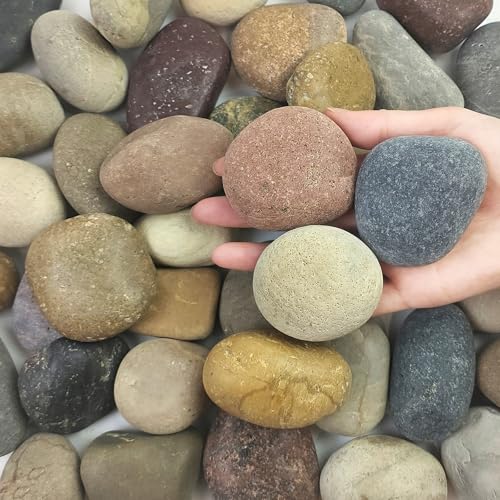
- Natural, non-toxic river stones
- Smooth 2- to 3-inch pieces
- Suitable for larger habitats and decor
Best For: Larger aquariums and natural layouts
Best for Betta Tanks
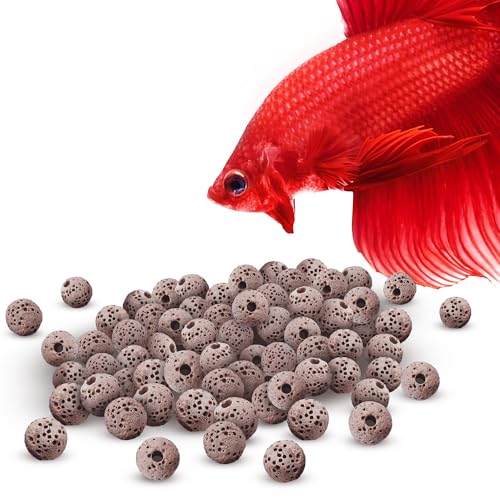
- Includes 50 porous lava beads
- Lightweight 0.2-inch pieces
- Supports flow and plant roots
Best For: Betta tanks and planted accents
Best for Aquascaping

- Five pounds of natural slate
- Rounded 3- to 5-inch pieces
- Designed for caves and cliffs
Best For: Structured freshwater or saltwater layouts
Best for GloFish Tanks

- Five-pound white aquarium gravel
- Fluorescent accents glow under blue LEDs
- Works as substrate or an accent
Best For: GloFish displays with blue lighting
Natural Slate Pick

- Natural PH-neutral slate
- Varied 3–5-inch pieces
- Useful for caves and cliffs
Best For: Custom aquarium hardscape and realistic enclosures
Polished Pebble Pick

- 5 pounds of smooth pebbles
- Mixed brown, white, and black tones
- Rounded 1–2-inch size
Best For: Decorative fish or turtle tanks and multipurpose projects
Fine Substrate Pick

- 10-pound bag of quartz gravel
- Fine 1–2mm grain size
- Dark contrast for planted tanks
Best For: Fine aquarium substrate and plant anchoring
Best Detail Stone
Dragon Stone Aquascaping Rocks

- Pre-selected pieces for coordinated layouts
- Porous surface supports moss and plants
- 2–4-inch stones suit accents and nano tanks
Best For: Nano aquascapes, shrimp tanks, and detail work
Best Smooth Accent Pebbles
Polished Mixed Color Aquarium Stones
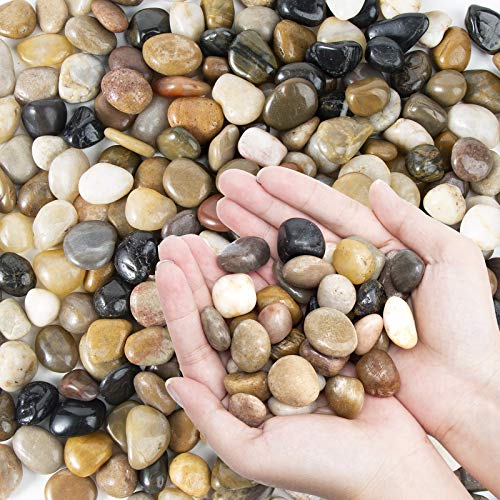
- 2 pounds of 0.5–1.2-inch pebbles
- Mixed natural shades add decorative variety
- Lightly polished for a smooth appearance
Best For: Aquarium accents and smooth decorative layouts
Best Large Lava Rock
Black Lava Rock Aquarium Stones

- 3 pounds of 3–5-inch lava rocks
- Rugged black texture suits bold layouts
- Mixed sizes support stacking and arranging
Best For: Large aquascapes and planted tank hardscape
Best Natural Pick – 5-Pound River Rocks
For aquarium rocks under 50, these 2- to 3-inch natural river rocks offer a substantial, smooth option for larger tanks and aquatic habitats. The 5-pound mix includes varied colors, shapes, and shades without added dyes or fillers.
Best For: Larger aquariums, fish or reptile habitats, and natural-looking tank layouts.
Pros:
- Natural, non-toxic stones with no added fillers or dyes
- Smooth, flat surfaces provide a comfortable habitat
- Large size is less likely to be swallowed by fish
- Reusable for aquariums, terrariums, ponds, and landscaping
Cons:
- Five pounds may cover less area than expected because the stones are heavy
- Large 2- to 3-inch pieces may not suit nano tanks
This is a practical choice when you want durable, natural stone rather than fine gravel. Expect a mixed-color appearance that changes slightly when the rocks are wet.
Best for Betta Tanks – Brown Lava Beads
Among aquarium rocks under 50, these compact lava beads are designed for small-scale tank decoration and substrate use. Each pack contains 50 porous, brown volcanic stones measuring about 0.2 inches.
Best For: Betta tanks, aquatic plants, and aquarists who want a lightweight porous substrate.
Pros:
- Fifty small beads provide flexible placement options
- Porous surfaces allow water to flow through the rocks
- Brown volcanic texture adds an earthy appearance
- Can support aquatic plant roots and requires minimal maintenance
Cons:
- The pack weighs only 0.5 ounces, so it is not intended for deep substrate coverage
- Very small pieces may be less suitable for larger tanks or bold rock structures
These lava beads make more sense as a light accent or plant-supporting layer than as a full-volume aquarium substrate. Their small size is particularly suited to betta setups.
Best for Aquascaping – Polished Slate Rock
For aquarium rocks under 50, this 5-pound polished slate set is a strong choice for creating structured aquascapes. The 3- to 5-inch natural stones have rounded, polished edges and can be arranged into caves, cliffs, mountains, or other terrain.
Best For: Freshwater or saltwater aquariums, rock structures, and reptile or terrarium displays.
Pros:
- Inert slate is designed not to alter water chemistry
- Polished, rounded edges are safer for aquatic life
- Large pieces support caves, cliffs, and stacked layouts
- Can be arranged, broken, or secured with aquarium-safe glue
Cons:
- Three- to 5-inch rocks may be oversized for small tanks
- Five pounds may require careful placement to create stable structures
This set is well suited to aquarists who want dramatic, natural terrain instead of loose gravel. Its stated freshwater and saltwater compatibility adds flexibility across aquarium styles.
Best for GloFish Tanks – White Fluorescent Gravel
If you are comparing aquarium rocks under 50 for a colorful display, this 5-pound white GloFish gravel provides a bright tank base. Its fluorescent accents are designed to stand out under GloFish blue LED lighting.
Best For: GloFish aquariums, colorful substrate, and tanks using blue LED lighting.
Pros:
- White gravel creates a bright, clean-looking foundation
- Fluorescent accents stand out under blue LED lights
- Can be used as substrate or as an accent around decor
- Five-pound package suits the listed 5-gallon tank use
Cons:
- The visual effect depends on compatible blue LED lighting
- It is decorative gravel rather than large natural rock for caves or structures
This is the most display-focused option in the group. Choose it when coordinating the substrate with GloFish plants, ornaments, and lighting matters more than a natural stone appearance.
Natural Slate Pick – Slate Aquarium Rocks
If you want aquarium rocks under 50 that create a more natural, structured aquascape, these hand-picked slate stones are a versatile option. Their varied shapes and 3–5-inch size work well for building caves, cliffs, and mountain-style layouts with aquarium-safe glue.
Best For: Aquarists creating custom rock formations, caves, or realistic planted and amphibian enclosures.
Pros:
- Natural, PH-neutral slate adds realistic texture and visual interest.
- Hand-picked, inspected, and washed before packing.
- Different sizes and thicknesses support creative layouts.
- Can be glued together with aquarium-safe glue.
Cons:
- Natural stones vary in shape, size, and thickness.
- Large 3–5-inch pieces may require more tank space.
- The listing identifies outdoor use as a specific use, so plan your aquarium layout carefully.
Choose this set when sculptural hardscape matters more than uniform coverage. The 3.5-pound assortment is especially suited to feature pieces rather than a complete tank substrate.
Polished Pebble Pick – Mixed River Rocks
For aquarium rocks under 50 with a smooth, decorative look, these 5 pounds of mixed-color river pebbles offer a practical choice. The rounded 1–2-inch stones come in brown, white, and black tones and can also be used for plants, vases, fountains, and landscaping.
Best For: Fish or turtle tanks needing smooth decorative stones, as well as multipurpose home and garden projects.
Pros:
- Polished, smooth surfaces have no sharp edges.
- Mixed colors and shapes create a varied natural appearance.
- Five-pound quantity provides a useful amount for decorating.
- Natural, non-toxic stone is suitable for aquarium decoration after cleaning.
Cons:
- Some machine-screened pebbles may exceed 2 inches in length.
- They are decorative rocks rather than a fine-grain planting substrate.
- Must be washed with hot soapy water and rinsed before aquarium use.
This is a flexible pick if you want rounded stones that transition easily between aquarium décor and other projects. Its smooth finish is a particularly useful feature for tanks with animals that interact with the bottom.
Fine Substrate Pick – Diamond Black Aquarium Gravel
Among aquarium rocks under 50, this 10-pound bag is better suited to full-bottom coverage than oversized décor pieces. The 1–2mm natural quartz gravel provides a fine black substrate that contrasts with planted tanks, reflects light, and helps anchor plants.
Best For: Aquariums needing a fine, dark substrate for coverage, plant anchoring, and visual contrast.
Pros:
- Natural quartz composition is described as aquarium safe.
- Fine 1–2mm grain offers broad, natural-looking coverage.
- Large surface area can support beneficial bacteria growth.
- Black color contrasts well with planted aquarium layouts.
Cons:
- Not recommended for snails or bottom feeders.
- Requires rinsing until the water runs clear before use.
- Fine gravel is less suitable for large sculptural hardscape designs.
Consider this option when you need a complete-looking dark base rather than a few statement rocks. Its 10-pound size and fine grain make it the most coverage-focused choice in this roundup.
Best Detail Stone – Dragon Stone Aquascaping Rocks
For aquarium rocks under 50, this 1-pound Dragon Stone set is a focused option for hobbyists who want coordinated pieces rather than a random assortment. Its porous texture and 2–4-inch size make it useful for shaping natural-looking freshwater layouts.
Best For: Nano aquariums, shrimp tanks, betta habitats, planted aquascapes, and foreground accent work.
Pros:
- Pre-selected stones are intended to work together in a balanced aquascape.
- Porous contours provide attachment points for moss and aquatic plants.
- 2–4-inch pieces are suited to detail work and accent placement.
Cons:
- The 1-pound quantity may be limited for larger aquarium layouts.
- Its smaller stone size is geared more toward accents than major structural builds.
This set is a practical pick when coordinated styling and fine hardscape details matter more than buying a large volume of rock.
Best Smooth Accent Pebbles – Polished Mixed Color Aquarium Stones
Among aquarium rocks under 50, these 2 pounds of lightly polished mixed-color pebbles offer a smooth decorative look. The 0.5–1.2-inch stones come in natural shades of brown, white, and black, making them suitable for aquarium accents and other displays.
Best For: Aquarium accents, water gardens, ponds, terrariums, and decorative projects where smooth, varied stones are preferred.
Pros:
- Natural mixed colors add visual variety to displays.
- Lightly polished surfaces provide a smooth decorative appearance.
- Useful across aquariums, terrariums, water features, and garden settings.
Cons:
- Natural pieces may vary in shape, thickness, and condition, and some may arrive broken.
- The stones are coated in paraffin wax to enhance color and shine.
- The smaller size is better for accents than large hardscape structures.
Choose these pebbles when a smooth, colorful finishing layer is more important than rugged texture or large architectural pieces.
Best Large Lava Rock – Black Lava Rock Aquarium Stones
For aquarium rocks under 50, this 3-pound set of 3–5-inch black lava rocks is designed for bold, rugged layouts. The naturally irregular pieces can be stacked and arranged for aquarium hardscape, planted tanks, and other natural displays.
Best For: Larger aquarium layouts, lava-rock hardscape, planted tanks, terrariums, bonsai displays, and succulent planters.
Pros:
- Natural black lava rock offers rugged texture and irregular shapes.
- Mixed-size pieces can be stacked and arranged into custom layouts.
- Versatile enough for aquariums, terrariums, bonsai, and planters.
- Rocks are cleaned before packing and need only a rinse after delivery.
Cons:
- Piece count varies because the rocks differ naturally in shape and weight.
- At 3–5 inches, the pieces may be too large for small or nano aquariums.
This is the strongest fit of the three for substantial, high-contrast hardscape work, provided your tank has enough room for its larger pieces.
How We Picked the Best Aquarium Rocks Under 50
We focused on affordable aquarium-safe stones and substrates suited to common freshwater setups. The selection covers several useful formats, including larger river rocks, slate, lava rock, polished pebbles, decorative gravel, and fine planted-tank substrate. We considered approximate quantity, stone size, surface texture, appearance, and how each material may support aquascaping or filtration.
Because natural stone can vary from one package to another, always inspect and rinse rocks before use. Avoid pieces with sharp edges, coatings, unusual odors, or visible debris, and verify compatibility with your fish and water parameters.
Quick Comparison
| Rock type | Best for | What to watch for |
|---|---|---|
| River rocks and polished pebbles | Natural layouts and smooth decoration | Size variation and heavy overall weight |
| Slate | Terraces, caves, and layered designs | Sharp edges or unstable stacking |
| Lava rock | Lightweight structures and biological surface area | Rough texture that can trap debris |
| Fine gravel | Full-tank coverage and planted displays | Compaction and difficult cleaning |
| Dragon stone | Detailed aquascaping focal points | Irregular cavities and fragile projections |
Key Buying Factors for Aquarium Rocks Under 50
Size and Quantity
Choose rock dimensions based on tank volume and livestock. Small aquariums generally benefit from a few compact pieces rather than several large stones. Check the listed weight and approximate dimensions, since a five-pound bag may contain fewer large rocks or many smaller pieces.
Safety and Water Chemistry
For most freshwater community tanks, inert stone is the simplest option. Some rocks can raise hardness or pH, which may be useful for certain species but unsuitable for soft-water fish. Test questionable materials separately before placing them in an established aquarium.
Texture and Stability
Smooth stones are a safer choice for fish that rest on the substrate or have delicate fins. Rough lava rock and angular slate can create excellent visual structure, but sand them, reposition them, or avoid them if they could cause injury. Stack heavy pieces securely and never allow them to press against the glass.
Cleaning and Maintenance
Rinse rocks thoroughly in clean water and scrub away dust before installation. Do not use soap or household cleaners. Fine gravel may require more careful siphoning, while larger stones can make debris easier to spot but may need to be lifted during deep cleaning.
Who Should Buy Which Aquarium Rocks Under 50?
Choose polished river pebbles or smooth natural rocks if you want a simple, low-risk decorative layout. Slate is better for creating ledges, caves, and layered hardscape. Lava rock suits aquascapers who want lighter structures or extra textured surface area for beneficial bacteria. Fine black gravel is a practical choice for planted displays where dark substrate makes green foliage stand out. Dragon stone is ideal for a more sculpted aquascape, while white decorative gravel works well when brightness and contrast are the priority.
Whichever option you choose, plan the layout before filling the tank, leave room for filtration and maintenance, and confirm that the rock’s chemistry and texture suit your fish, shrimp, plants, and water conditions.